Textile Designer CV Examples
As a Textile Designer, your creativity and technical knowledge make you essential to fashion, interiors, and product design.
Build your resume for free
Textile Designer CV
How to Write Your Textile Designer CV
Learn how to create your own interview-winning Textile Designer CV with this simple step-by-step guide.
This guide will walk you through writing a Textile Designer CV that highlights your design expertise, technical capabilities, and collection development skills.
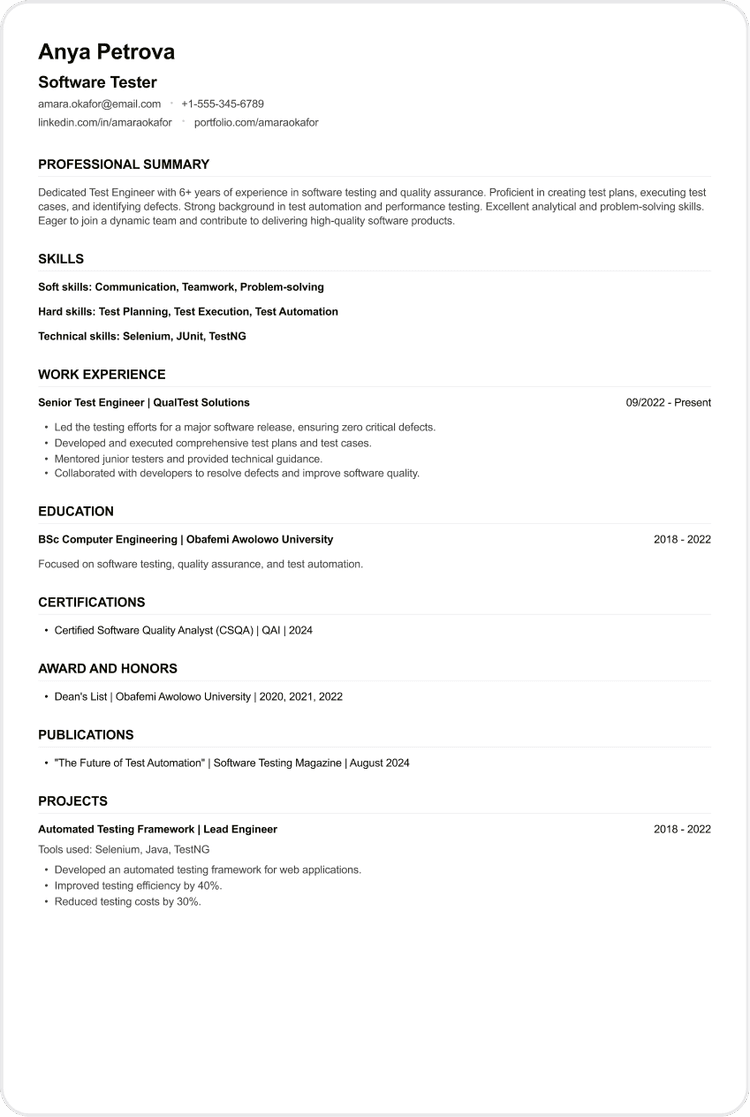
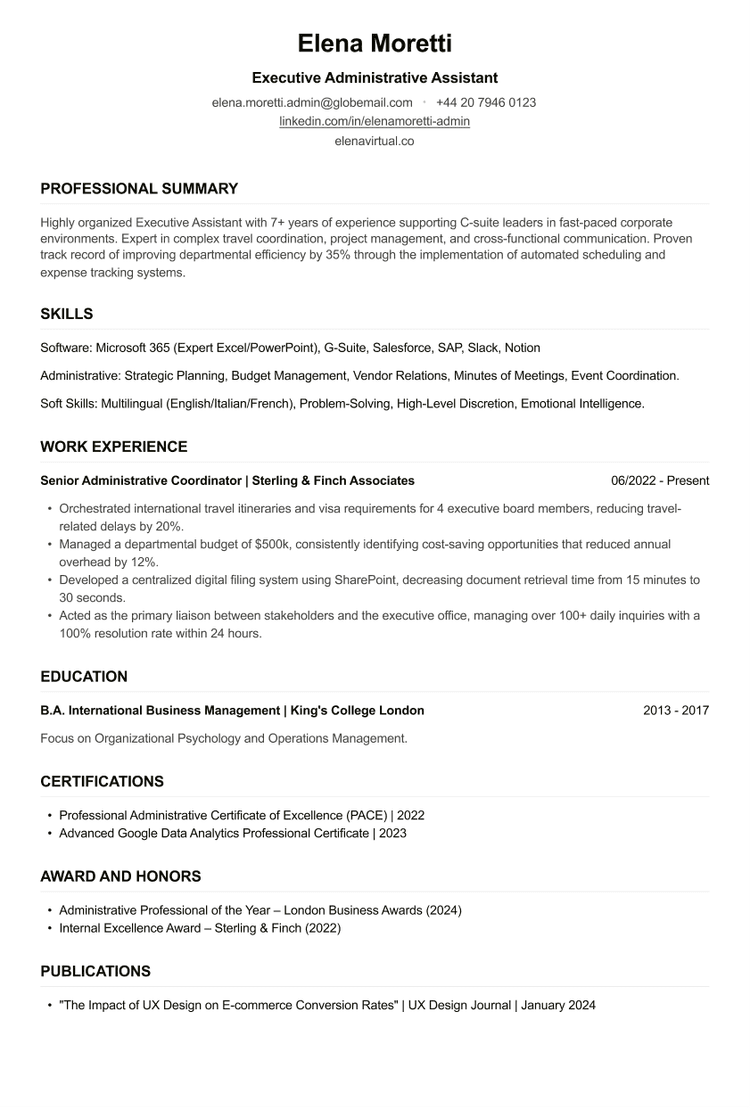
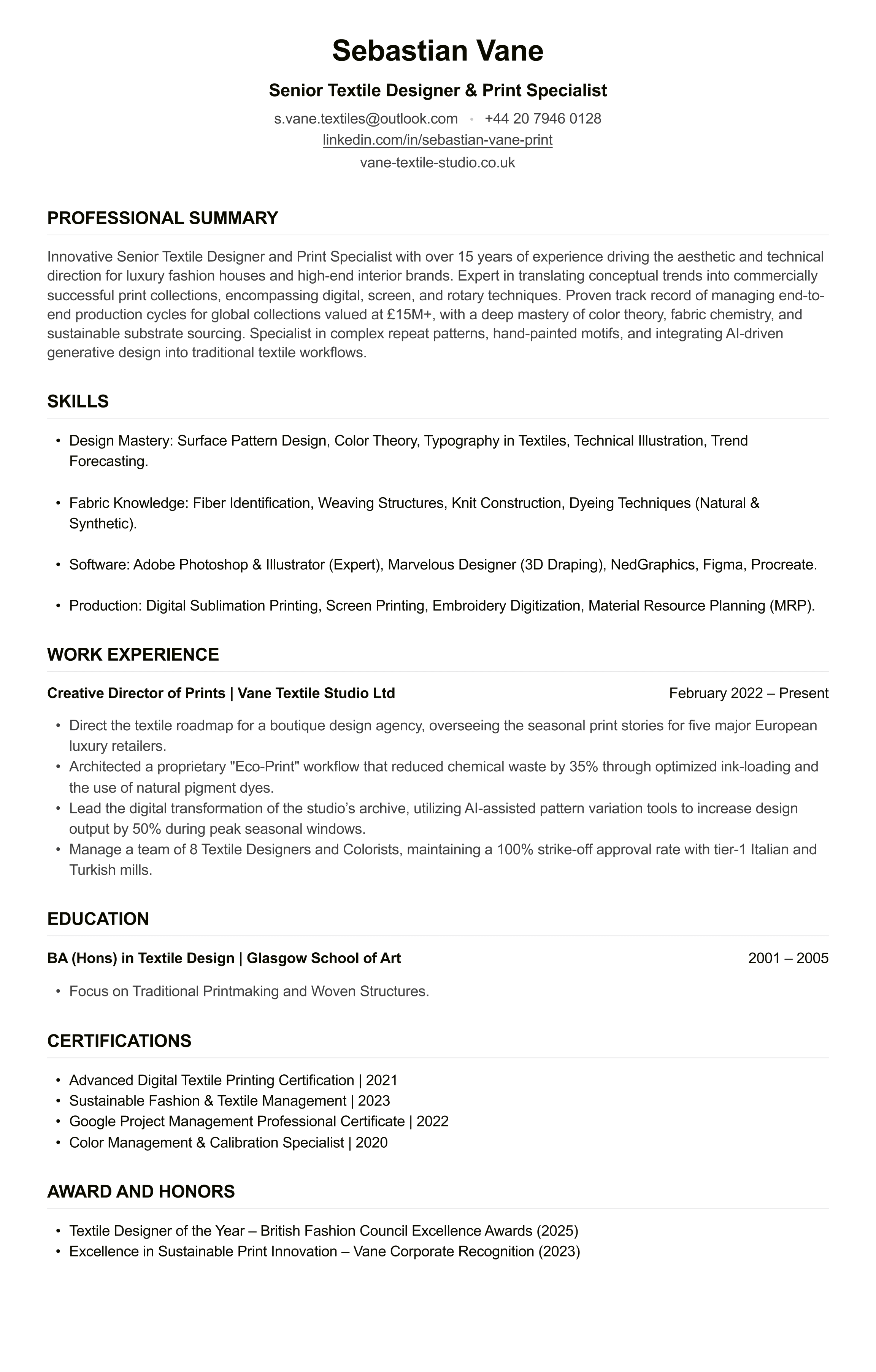
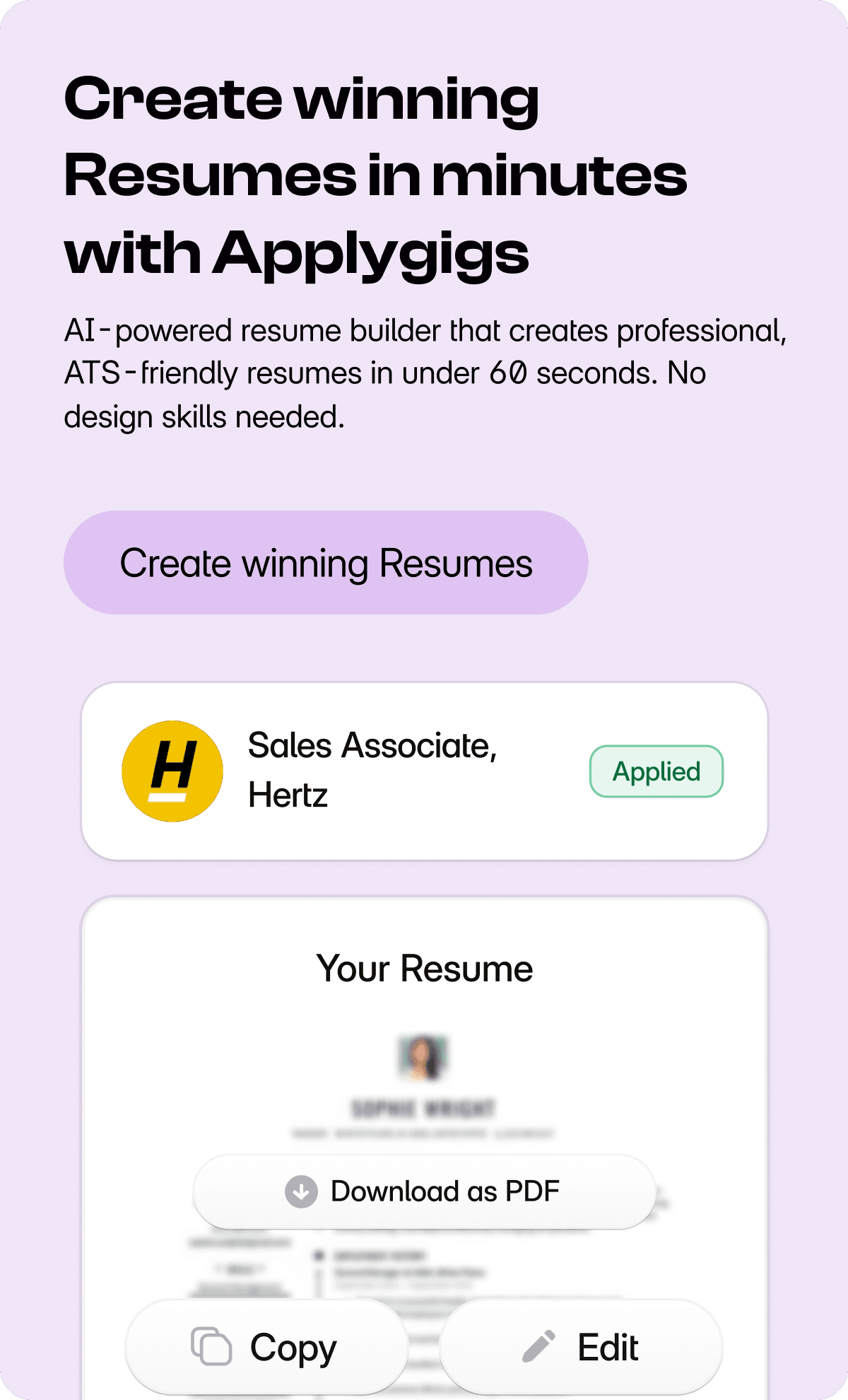
Textile Designer CV example
Structuring your Textile Designer CV


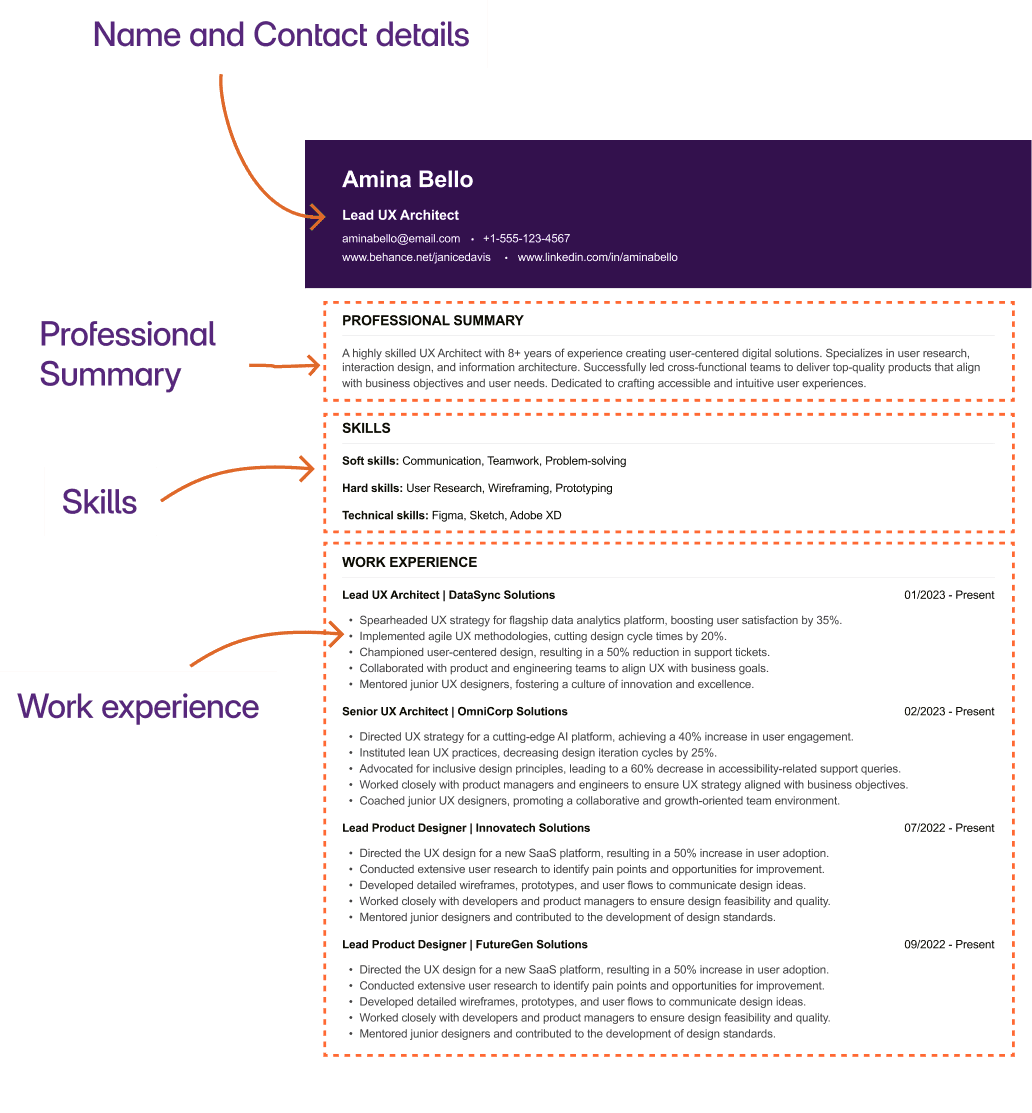
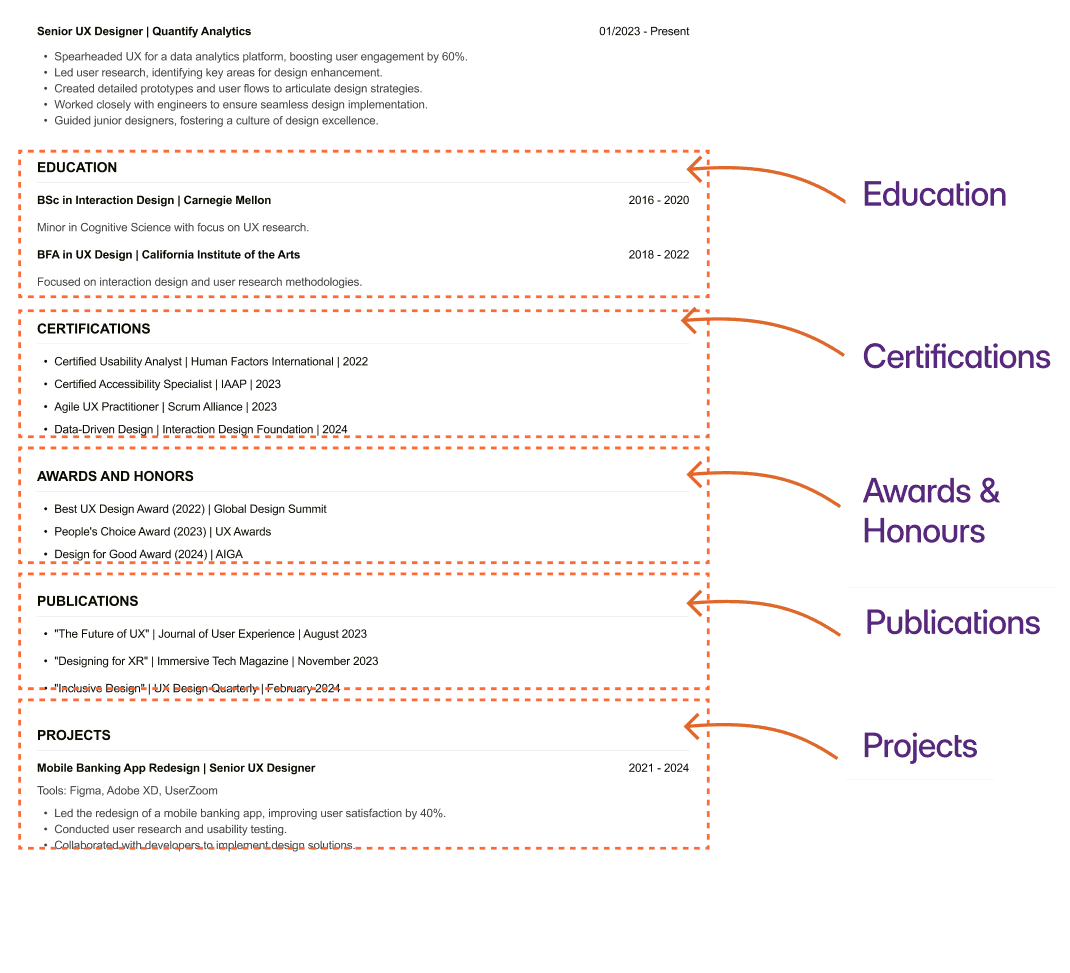
Your CV needs to be as carefully composed as your textile patterns.
Here's how to structure your Textile Designer CV
- Name and contact details – Place personal information at the top so employers can reach you easily.
- CV profile – Kick things off with a concise overview of what makes you the ideal candidate for the job.
- Core skills – Quickly highlight your most relevant strengths.
- Work experience – Detail your roles in reverse chronological order, focusing on measurable results.
- Education – Provide details on your academic qualifications and relevant certifications.
- Additional info – Optionally, mention certifications, memberships, or personal projects.
Formatting your Textile Designer CV
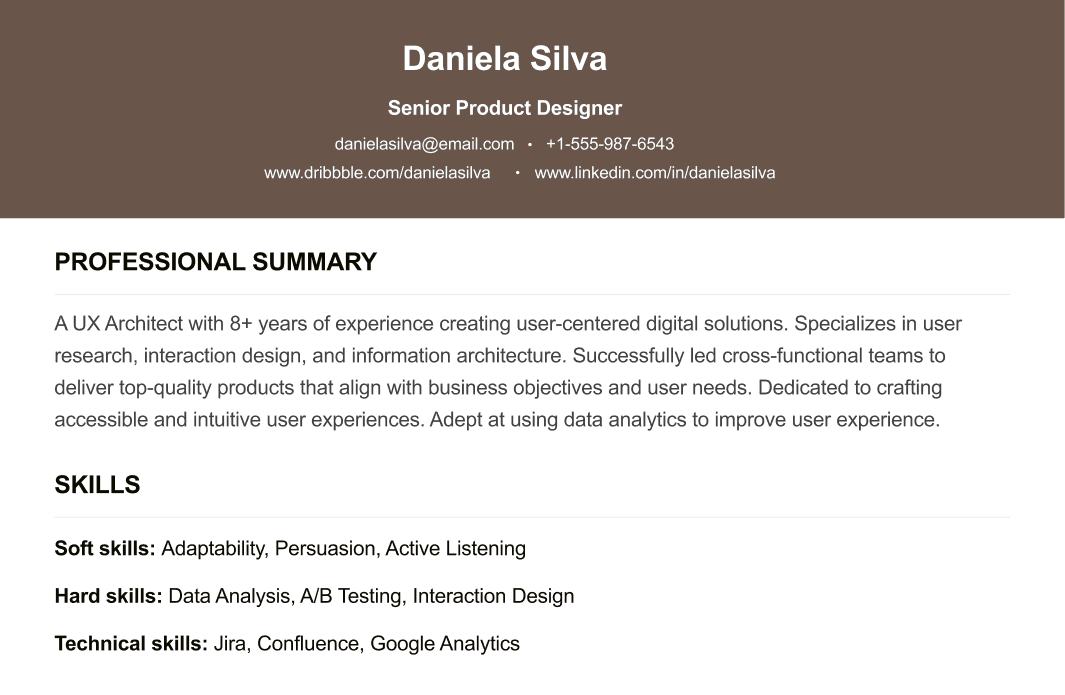
You want to prove to a recruiter that you're creative and professional, so what better place to start than your CV?
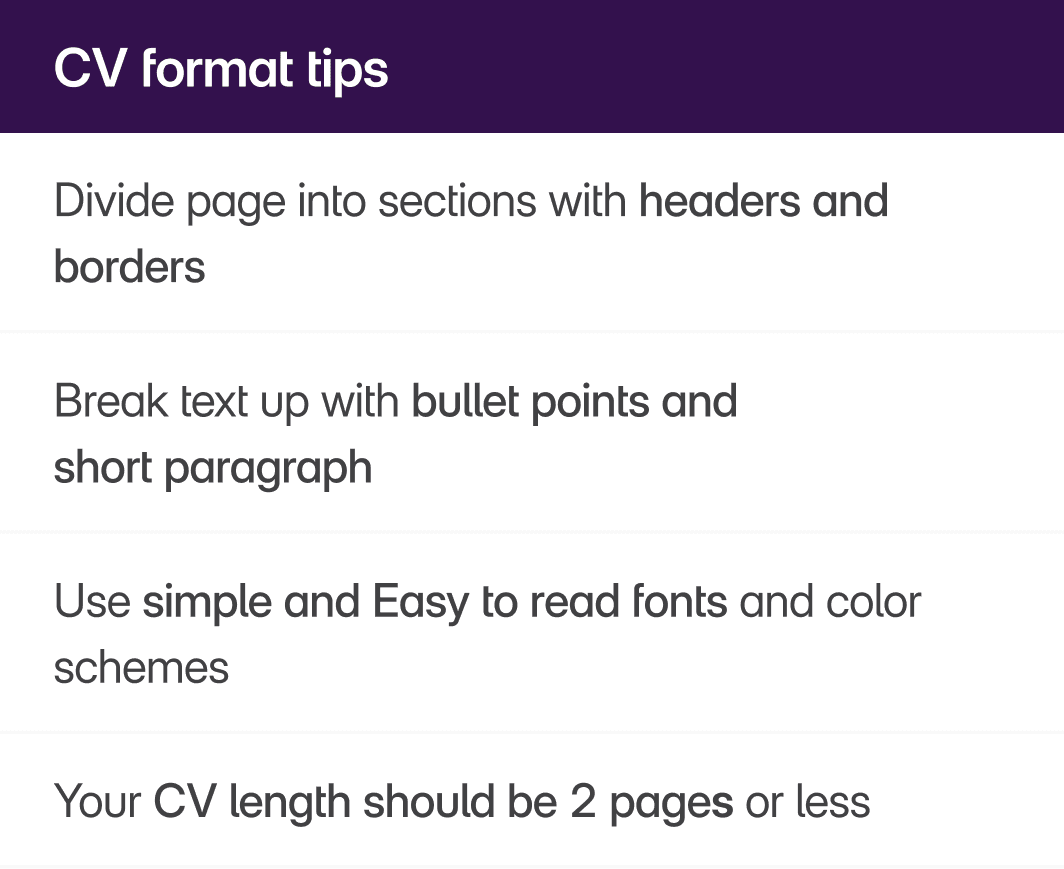
Here's some useful tips to format your Textile Designer CV effectively:
- Bullet points – Break down duties and achievements into concise details.
- Divide sections – Use clear headings for a straightforward layout.
- Use a clear font and colour scheme – Keep your layout uncluttered for maximum readability.
- No more than 2 pages – Keep it focused on your best and most relevant qualities.
Writing a Textile Designer CV Professional summary
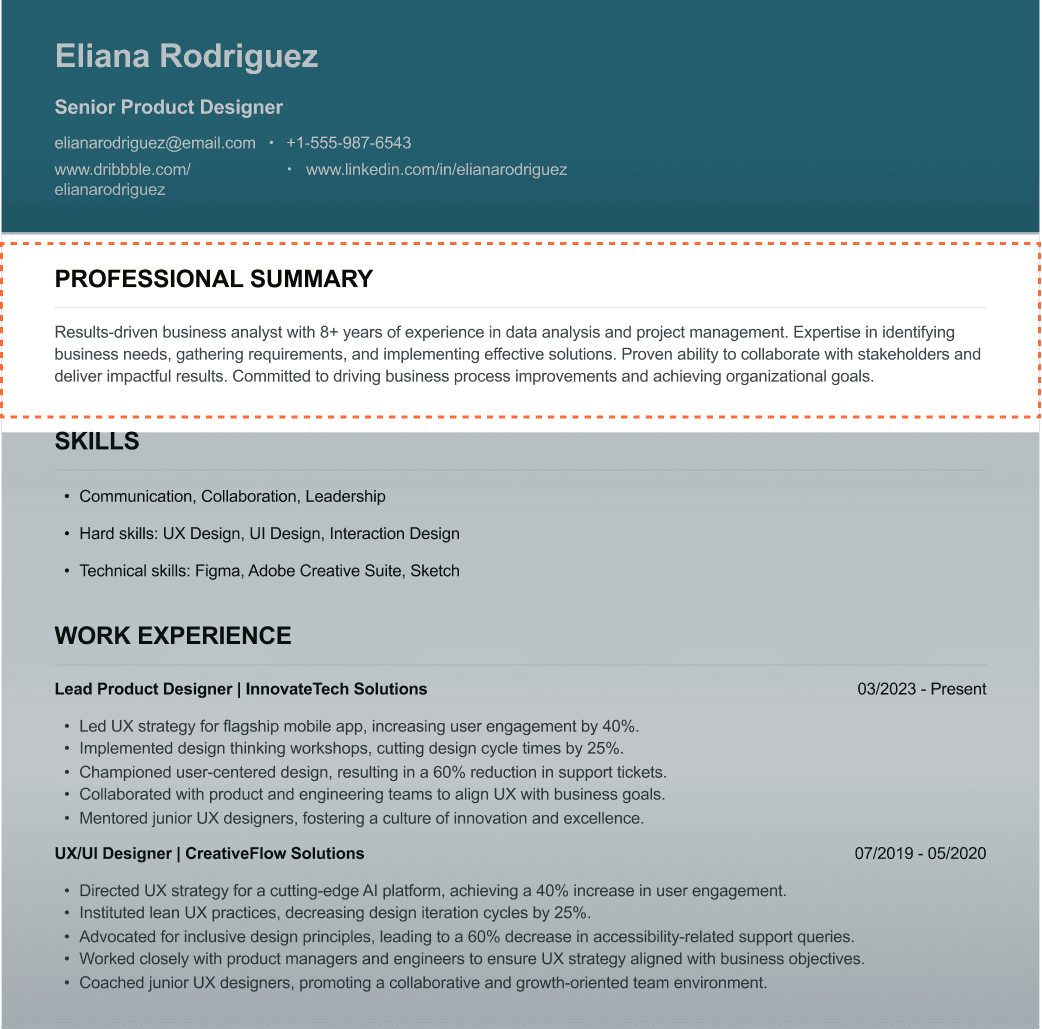
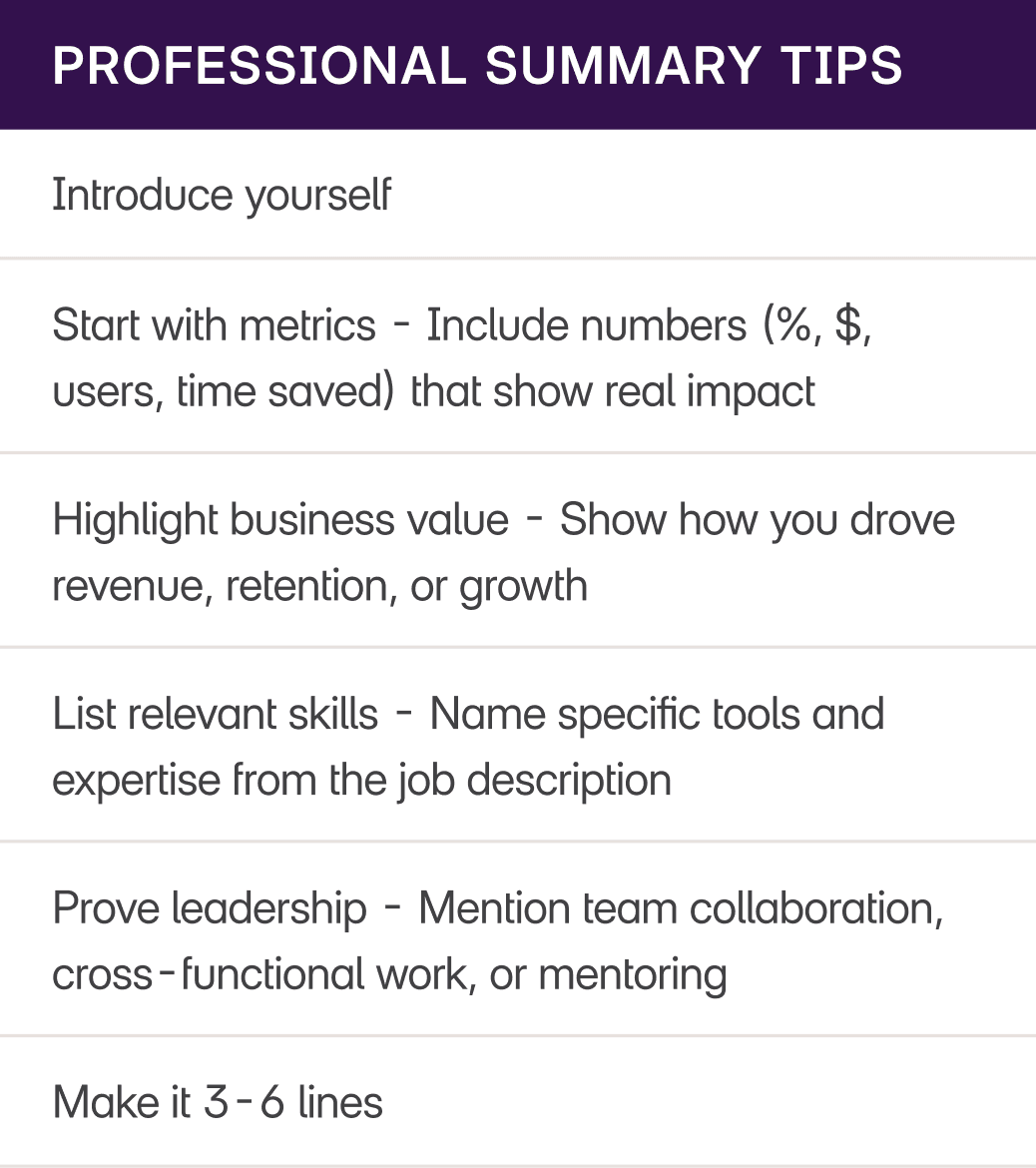
Your CV profile is your chance to introduce yourself as a creative, technically skilled Textile Designer who creates compelling fabric designs.
Textile Designer CV professional summaries :
Professional summary 1
Creative Textile Designer with five years developing print and woven fabrics, skilled in Adobe Creative Suite, repeat pattern design, and colorway development. Proven track record of designing 30+ collections generating £2 million+ retail sales, achieving 85% design approval rate from buyers, and creating trend-forward textiles across fashion, home furnishings, and accessories with strong understanding of market trends and production processes.
Professional summary 2
Experienced Senior Textile Designer with seven years across fashion and interiors sectors, specializing in digital printing, surface pattern design, and technical development. Expertise in leading design projects from concept through production, reducing sampling costs by 40% through digital workflows, and delivering commercial collections achieving 70%+ sell-through rates across luxury fashion, contract furnishings, and lifestyle brands.
Professional summary 3
Accomplished Lead Textile Designer with over nine years transforming fabric design, focusing on sustainable materials, hand-crafted techniques, and design direction. Proven ability to manage design teams of 4+ designers, develop signature textile styles generating £5 million+ annual revenue, create award-winning collections featured in 10+ international publications, and deliver innovative textiles across haute couture, interior design, and art-to-wear sectors.
What to Include In Your Textile Designer CV profile:
- Where you've worked – Mention the types of companies or sectors you've worked in, such as fashion, interiors, print studios, or freelance.
- Your top qualifications – Highlight your textile design degree, CAD certifications, or specialized training.
- Essential design skills – Include your proficiency with pattern design, color development, Adobe Illustrator/Photoshop, and fabric knowledge.
- Portfolio highlights – Reference collections designed, retail performance, or published work.
- Relevant specializations – Mention experience with specific techniques, markets, or fabric types.
How to Present a Textile Designer Core Skills Section Properly
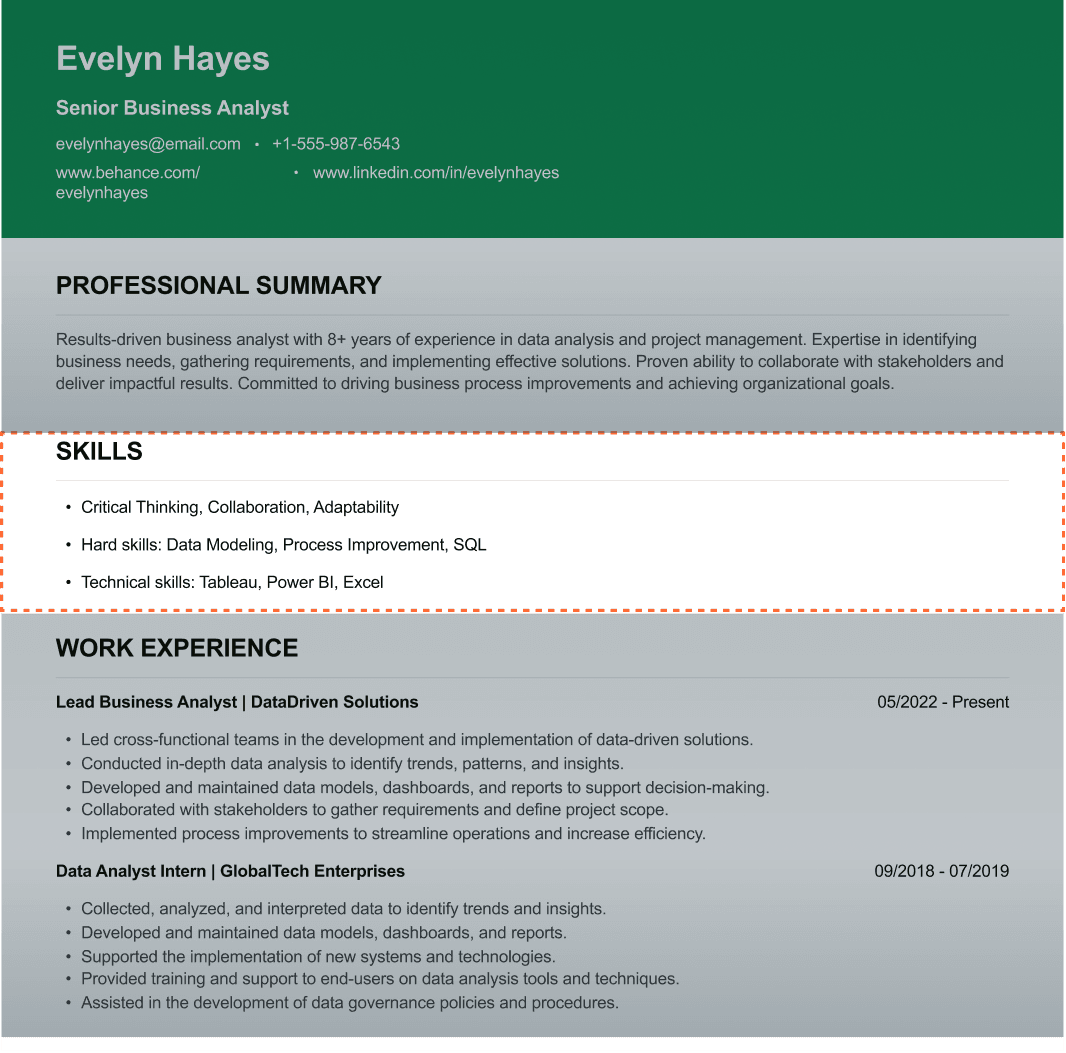
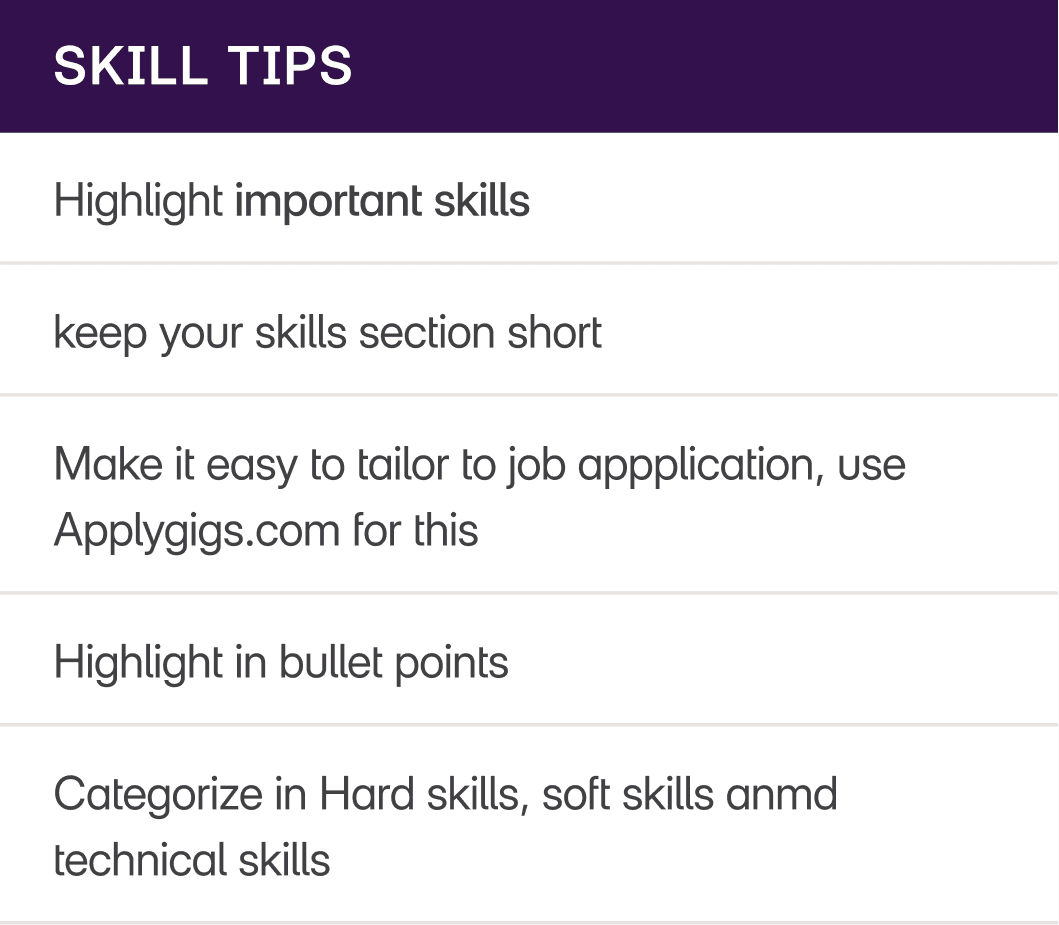
The core skills section is your quick-reference list, showing employers why you're the Textile Designer who can deliver compelling fabric designs.
Textile Designer CV Top skills
Top skills for Textile Designer CV
- Pattern Design – Creating repeat patterns, placements, and engineered designs for various applications.
- Adobe Creative Suite – Expert proficiency in Illustrator and Photoshop for textile design development.
- Color Development – Creating color palettes, colorways, and seasonal color stories.
- CAD Software – Using specialized textile design software like NedGraphics, Lectra, or AVA CAD.
- Trend Research – Analyzing fashion and interior trends translating insights into commercial designs.
- Fabric Knowledge – Understanding fibers, weaves, knits, and finishing processes.
- Technical Development – Creating tech packs, strike-offs, and production specifications.
- Hand Techniques – Skills in screen printing, dyeing, embroidery, or other craft processes.
How to Write a Textile Designer CV Work Experience
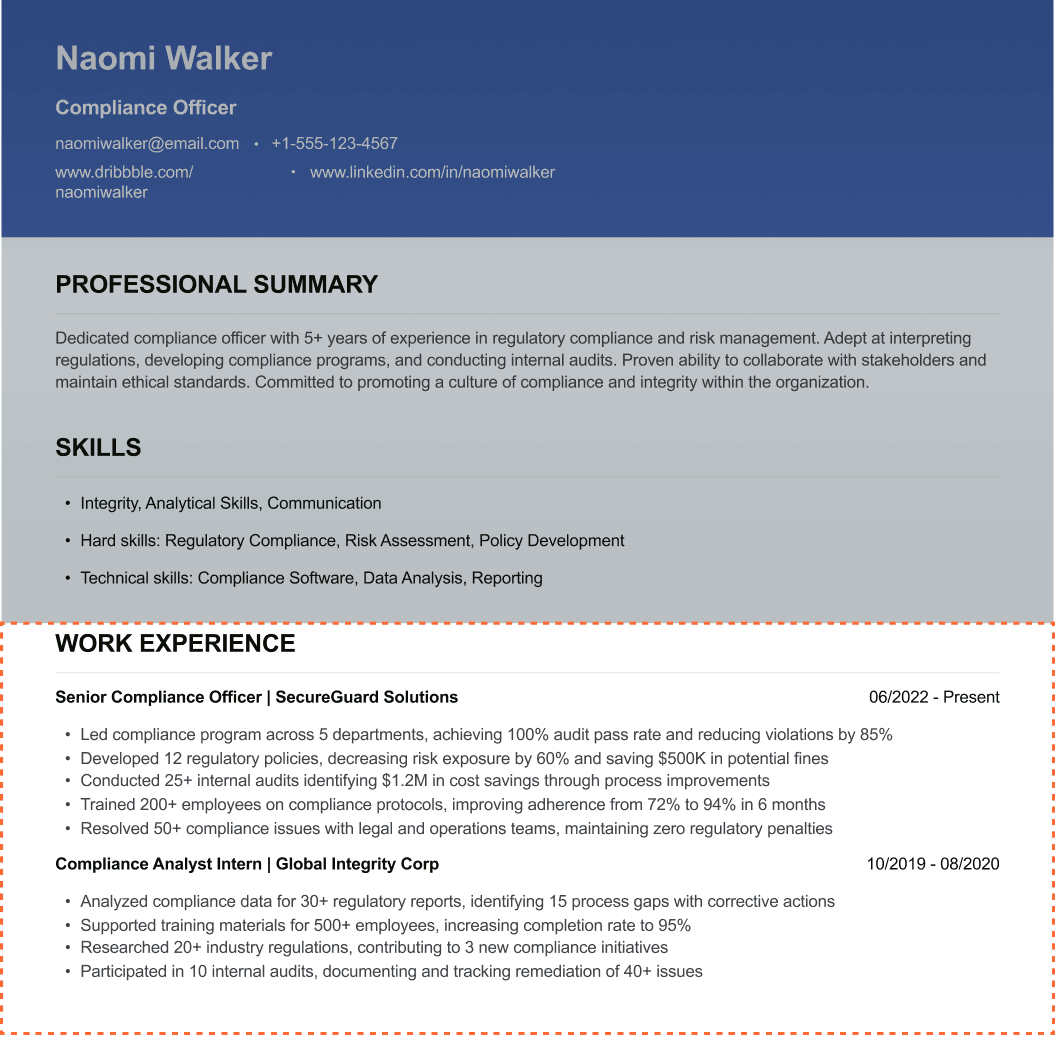
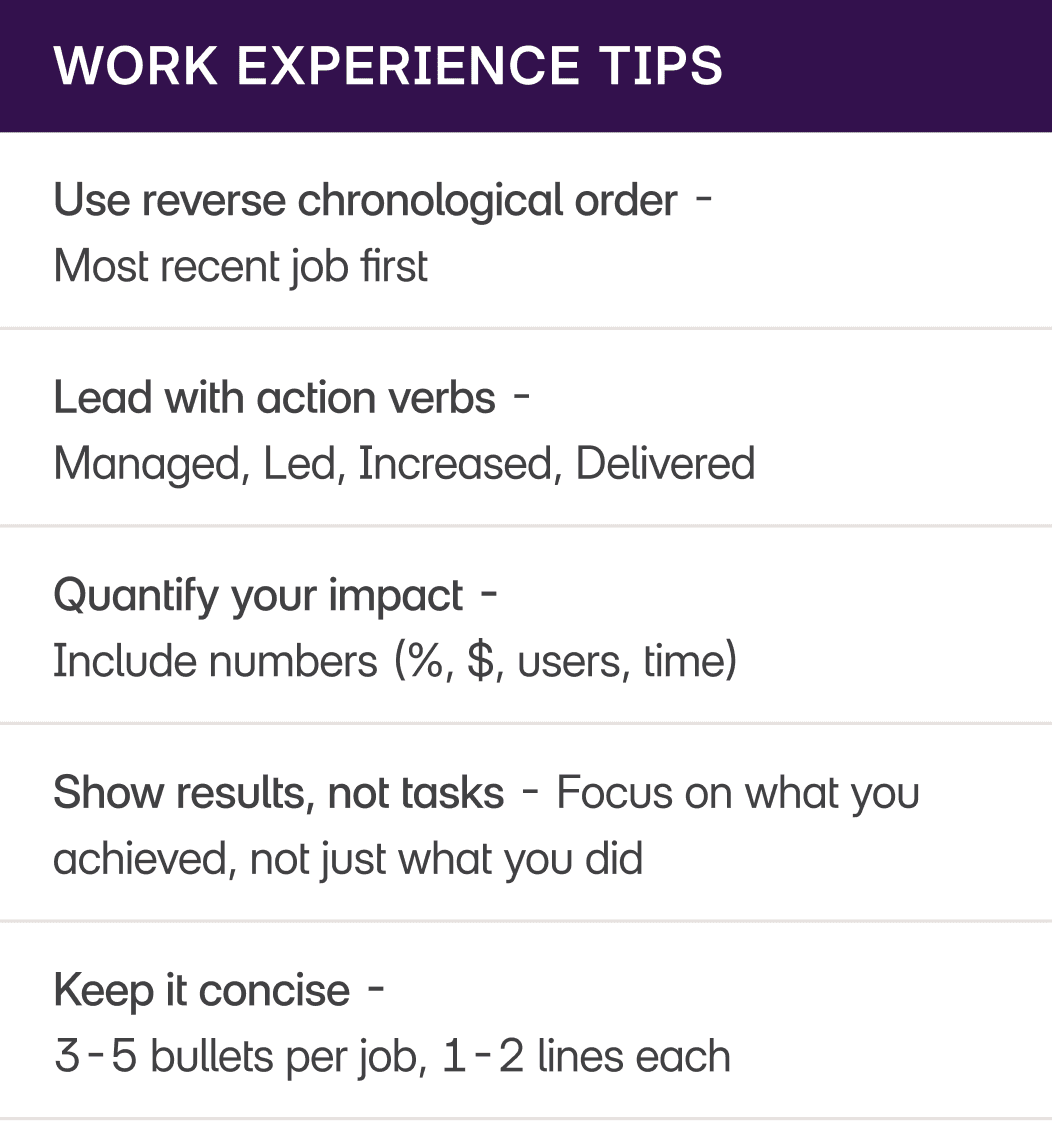
Here's the bulk of your CV: your work experience section is where you prove how your design expertise has created successful textile collections.
Textile Designer CV Work experience examples
Textile Designer | Fashion Brand
Responsibilities
- Designed 6 seasonal print collections creating 120+ original patterns and 400+ colorways annually using Adobe Illustrator and Photoshop, achieving 82% design approval rate from design director and buyers demonstrating strong commercial awareness, with bestselling prints driving 25% of seasonal revenue and reordered for multiple seasons based on customer demand.
- Researched trends attending Première Vision, analyzing runway shows, and monitoring consumer insights, translating findings into cohesive collection concepts that aligned with brand aesthetic and market positioning, creating mood boards and color stories guiding seasonal direction with designs contributing to 30% year-over-year sales growth.
- Developed technical specifications collaborating with suppliers on print trials, strike-offs, and quality standards, reducing sampling rounds from average 3 to 1.5 through clear communication and digital approvals, saving £45,000 annually in sampling costs while maintaining quality standards and achieving 95% first-strike color accuracy.
- Created repeat patterns and engineered placements optimizing designs for garment construction and production efficiency, working with pattern cutters on print placement achieving minimal fabric waste averaging 8% versus industry standard 12%, and designing engineered prints for signature dress styles generating £800,000+ seasonal revenue.
- Managed digital asset library organizing 2,000+ designs with metadata and version control, establishing workflow enabling efficient design retrieval and adaptation, reducing design development time by 35%, and supporting archive mining that generated £200,000+ revenue from reissued heritage prints.
Writing a Textile Designer CV section
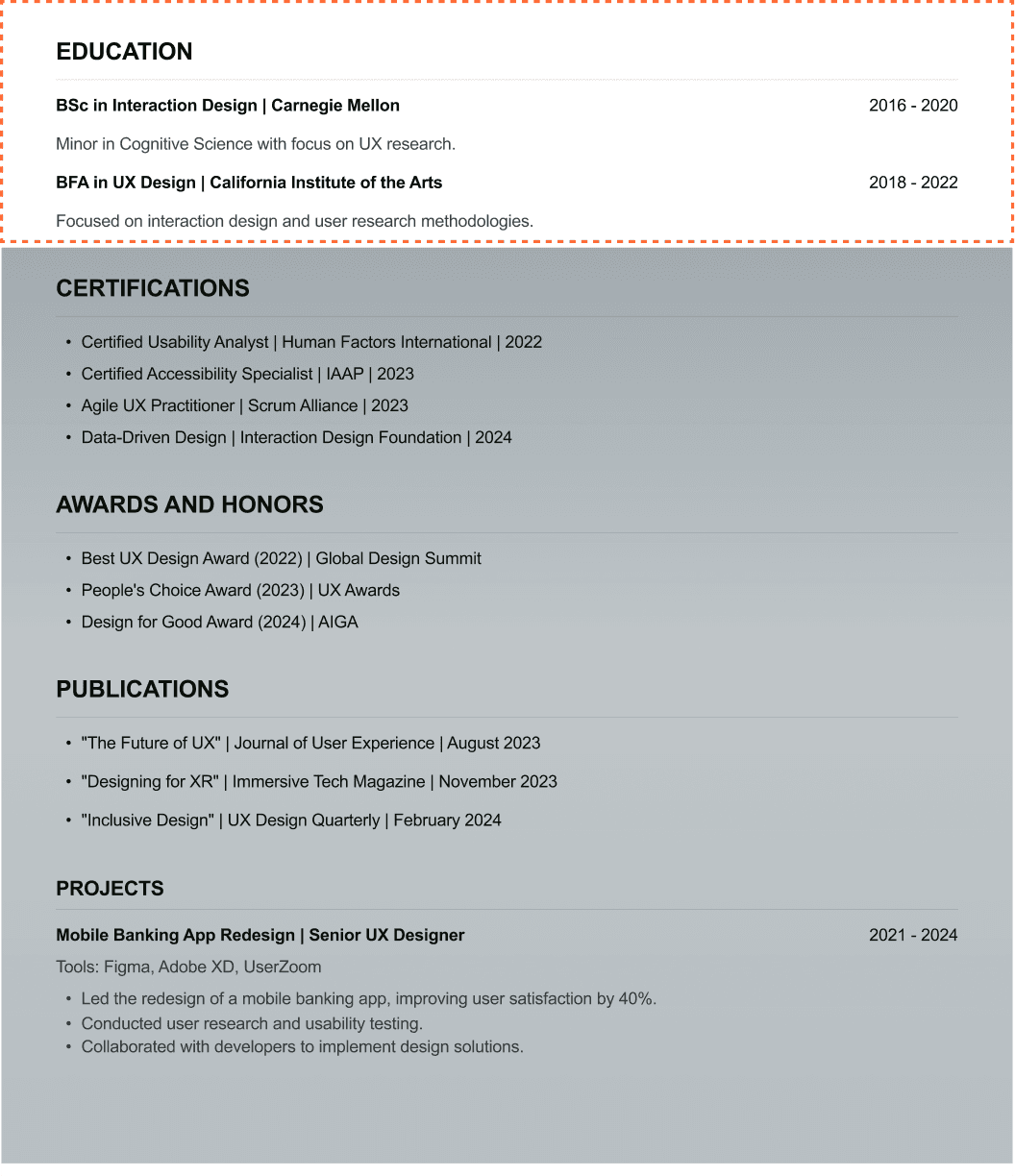
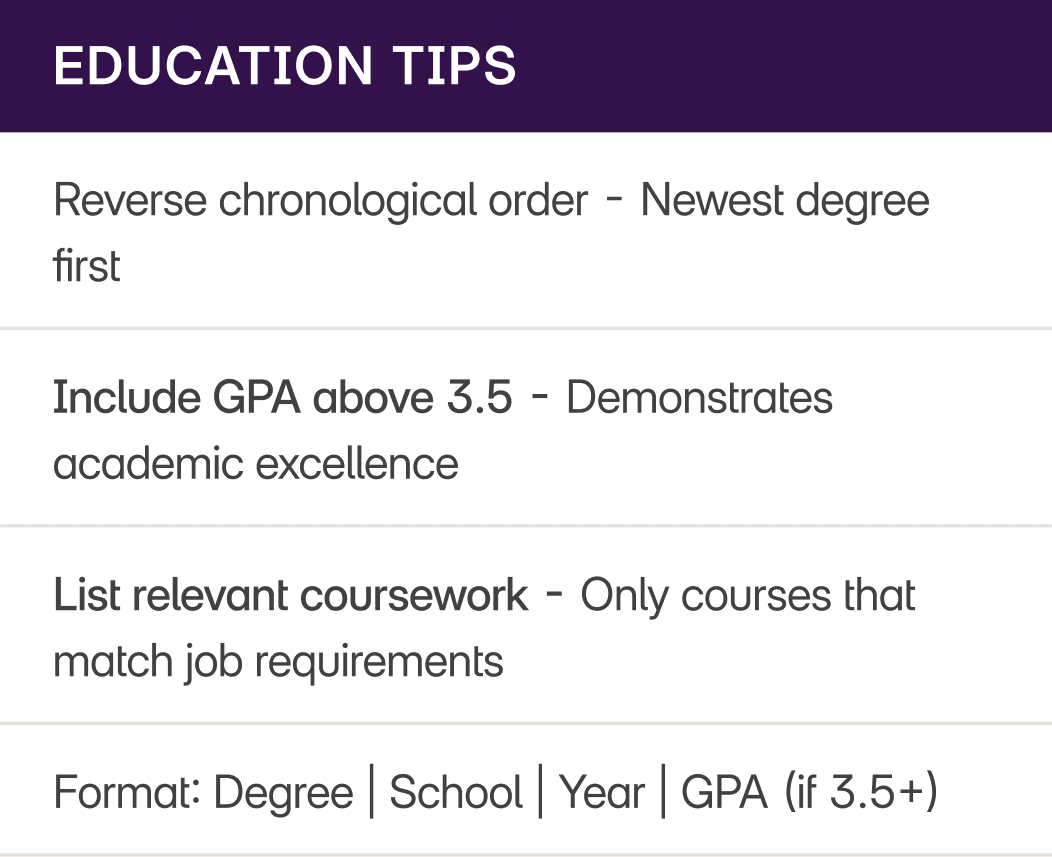
The education section shows the qualifications that lay the foundation for your textile design career.
Best Qualifications for Textile Designer professionals
- Bachelor's Degree in Textile Design – Specialized textile design education.
- Bachelor's Degree in Fashion or Surface Pattern Design – Related design qualification.
- Master's Degree in Textile Design or Material Futures – Advanced qualification for senior roles.
- Foundation Diploma in Art and Design – Pre-degree art foundation.
- CAD Software Certifications – Adobe Certified Professional or textile CAD training.
- Specialized Courses – Print techniques, weaving, knitting, or dyeing workshops.
How to Write a Textile Designer CV Certification, Awards and Publication Section
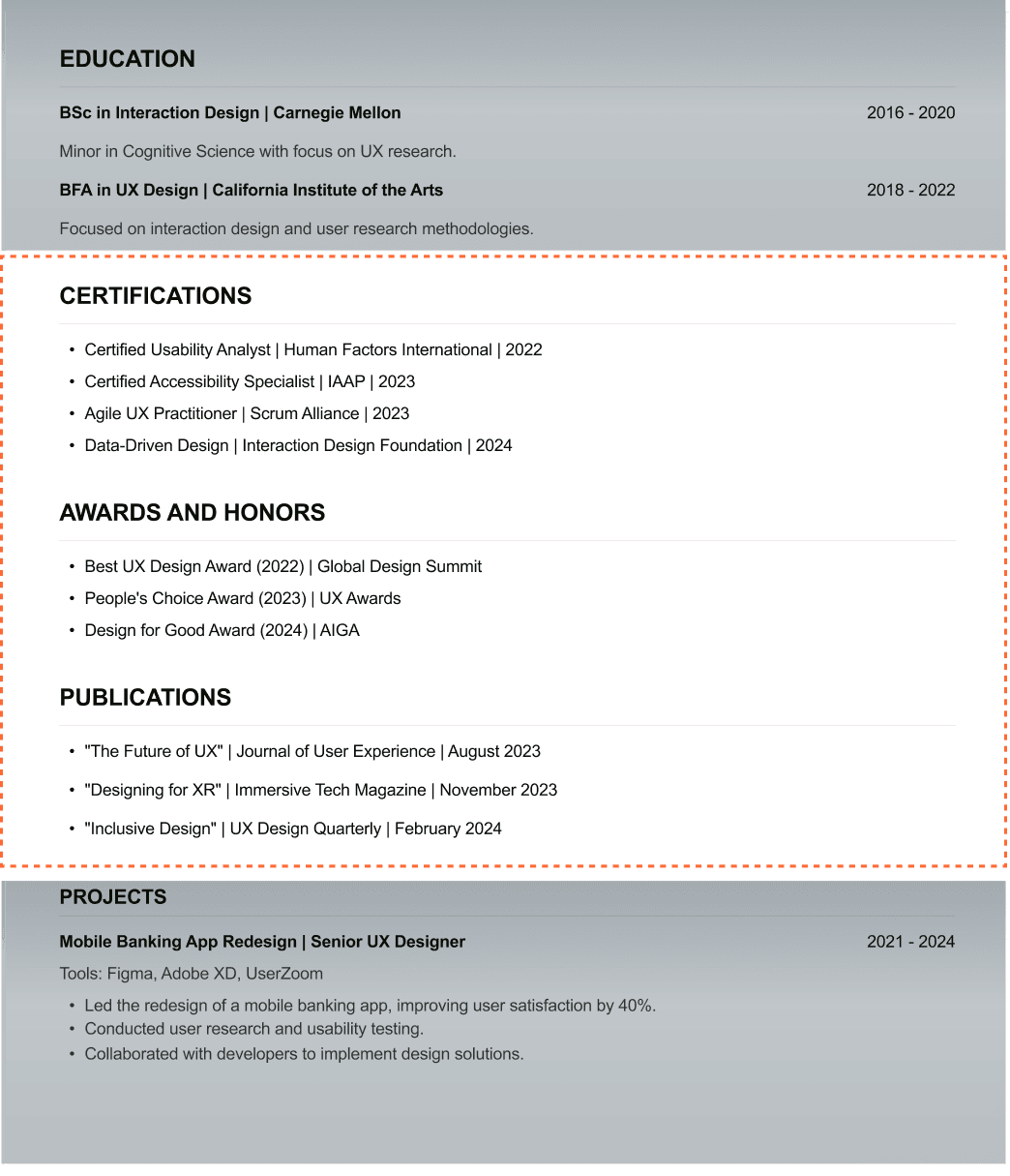
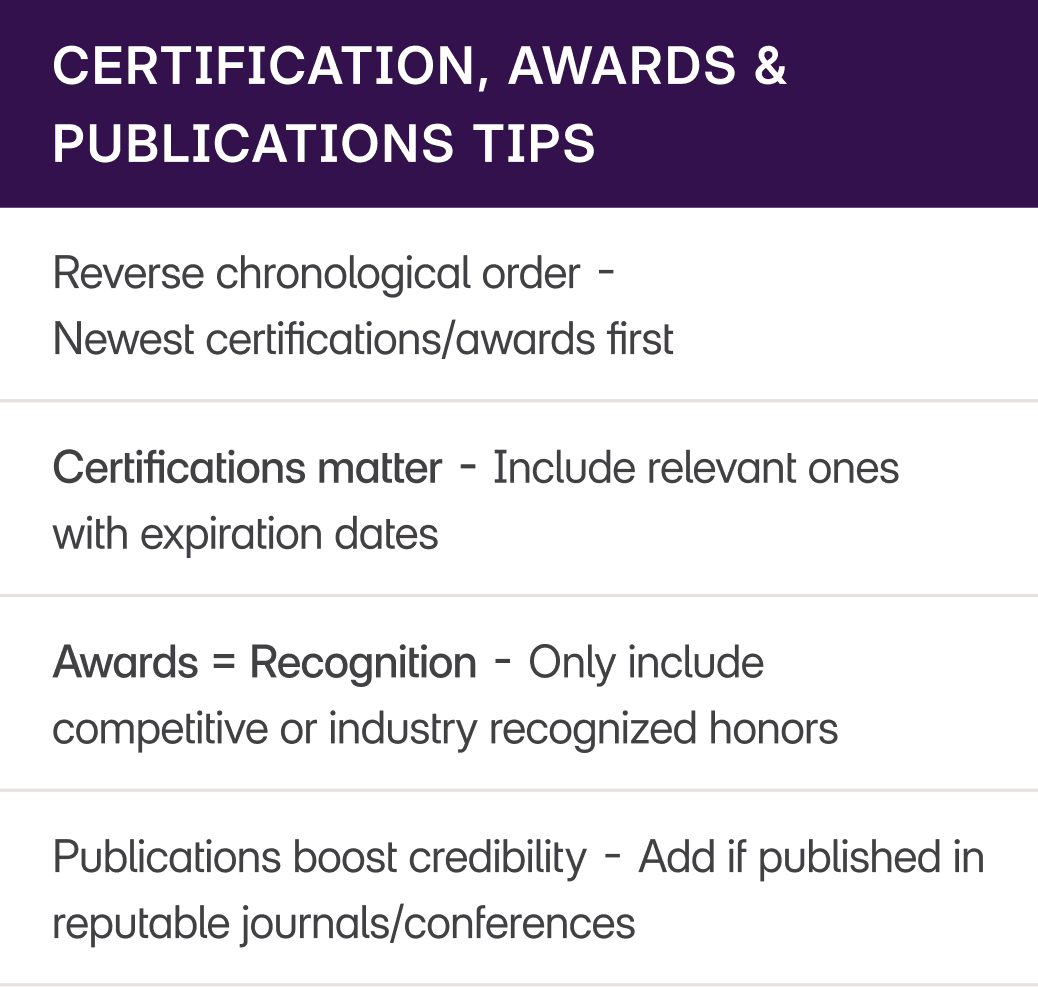
Adding a dedicated section for certifications, awards, and publications can significantly strengthen your Textile Designer CV by demonstrating your design excellence, professional development, and industry recognition.
Textile Designer CV certification, Awards and Publication examples
Adobe Certified Professional – Illustrator – Adobe, 2024
Textile Design Masterclass – Central Saint Martins, 2023
Sustainable Textile Design Certificate – London College of Fashion, 2024
Screen Printing Workshop – Royal College of Art, 2023
Digital Textile Printing Certification – Epson, 2024
How to Write a Textile Designer CV Projects Section
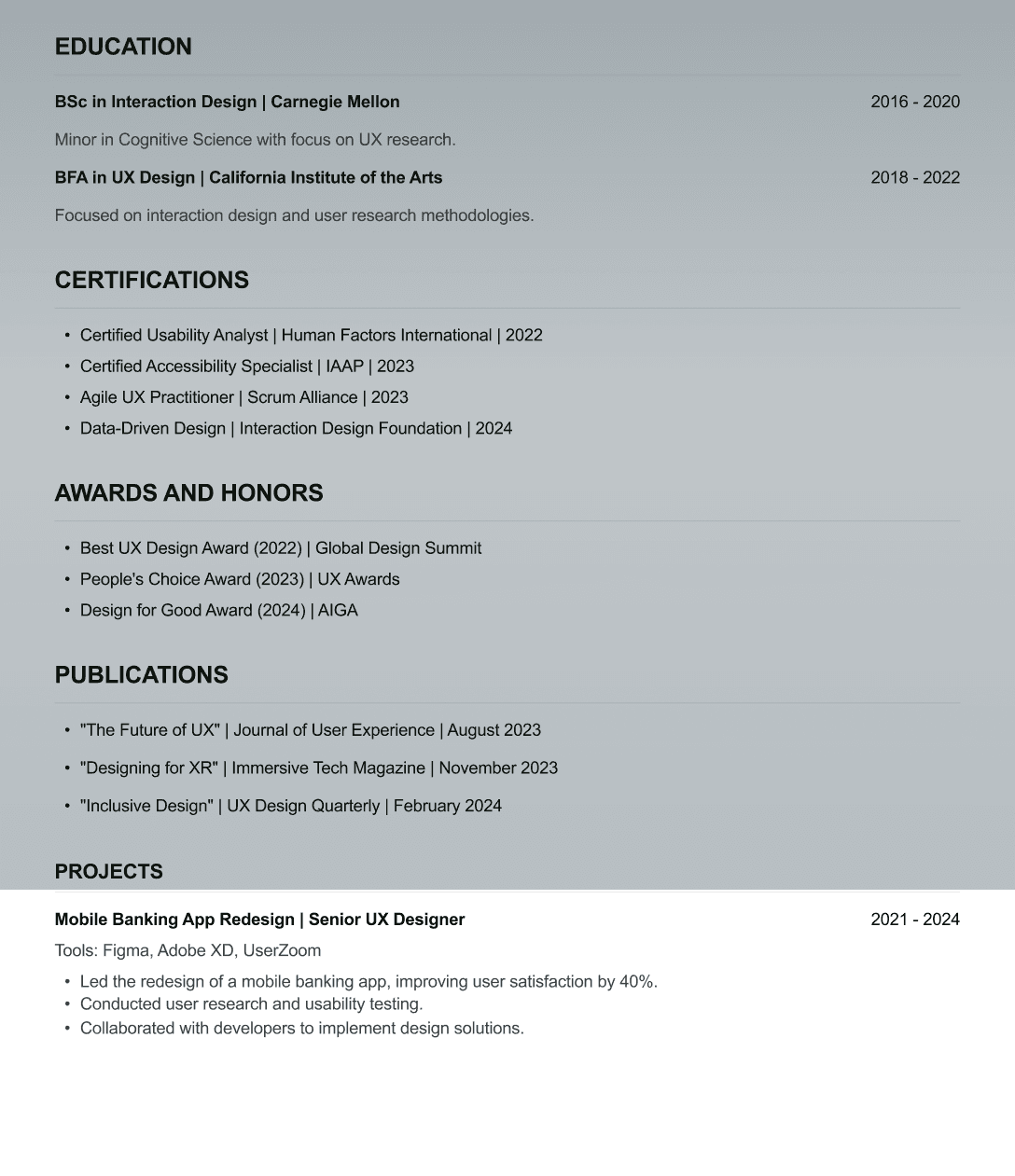
Showcasing specific projects in your Textile Designer CV demonstrates your ability to create successful collections and deliver commercial designs.
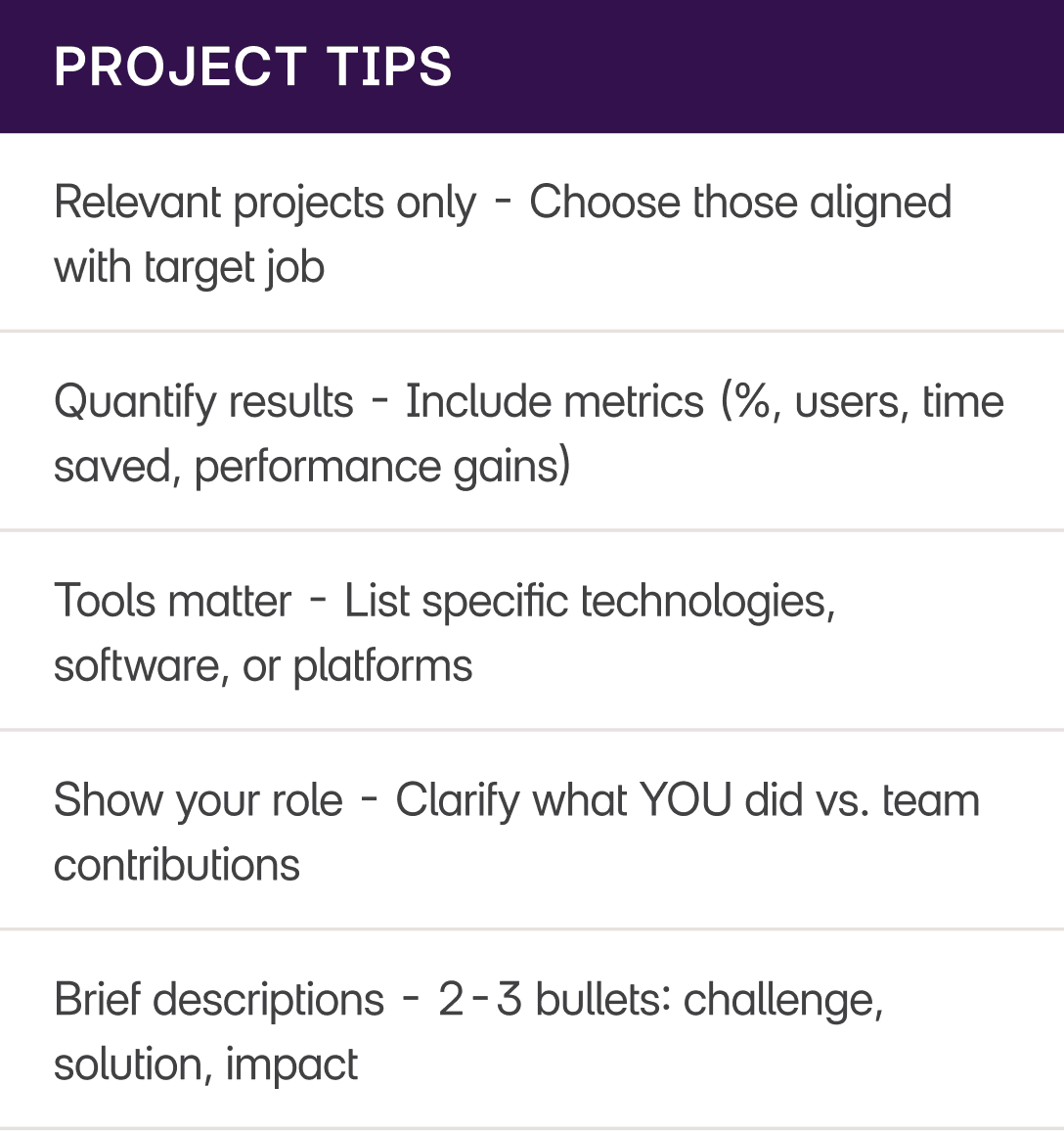
How to structure project descriptions
Project Title | Organisation | Duration
- Project overview – Brief description of the collection and design challenge
- Your role – Your specific design responsibilities and creative approach
- Key activities – Designs created, development performed, and collaboration delivered
- Results – Commercial success, production outcome, or design recognition
Textile Designer CV projects examples
Spring/Summer 2025 Print Collection | Contemporary Fashion Brand | Aug 2023-Feb 2024
Designed complete print collection for Spring/Summer 2025 season including 25 original patterns across 8 design stories, supporting 120-piece garment range targeting millennial and Gen Z customers, achieving 78% sell-through rate and generating £1.8 million retail sales across 180 stores and e-commerce platform.
- Researched seasonal trends analyzing Paris and Milan fashion weeks, color forecasting services, and Instagram engagement data identifying emerging aesthetic of optimistic maximalism, creating trend presentation synthesizing findings into 8 cohesive print stories ranging from bold florals to abstract geometrics that received unanimous approval from creative director and merchandising team.
- Designed 25 original repeat patterns and 12 engineered placement prints using Adobe Illustrator creating artwork at production scale with precise color separation, developing 180+ colorway variations across print stories, achieving 85% first-presentation approval rate from design director demonstrating strong understanding of brand aesthetic and commercial viability.