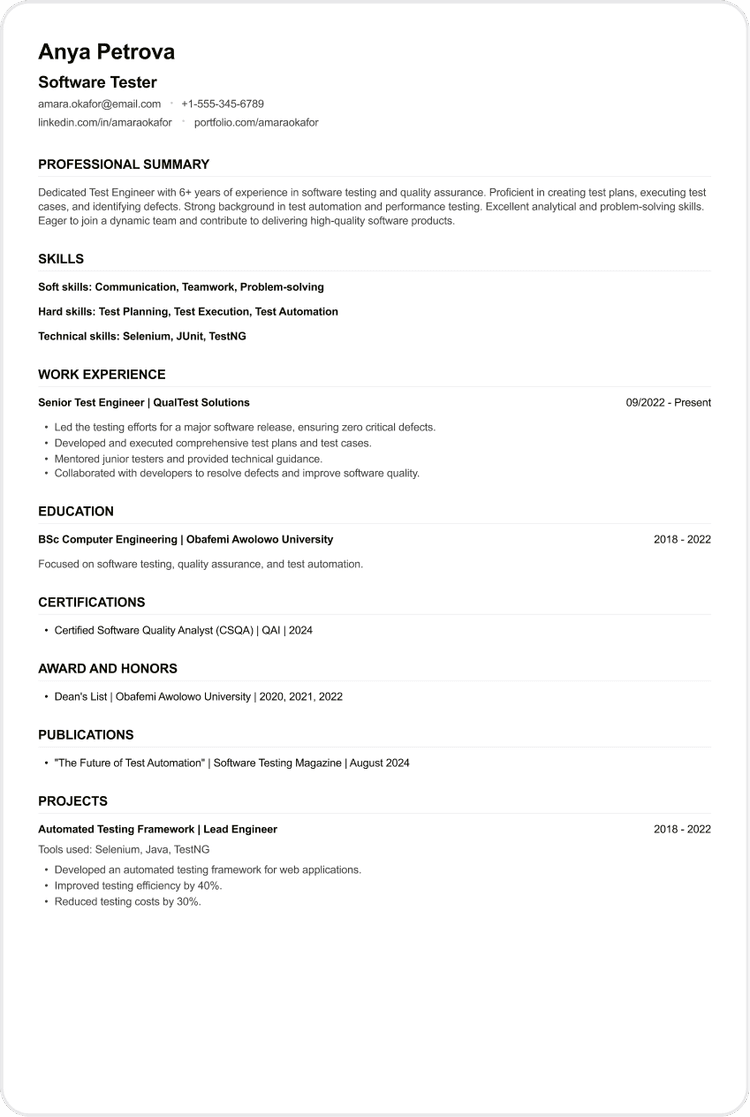
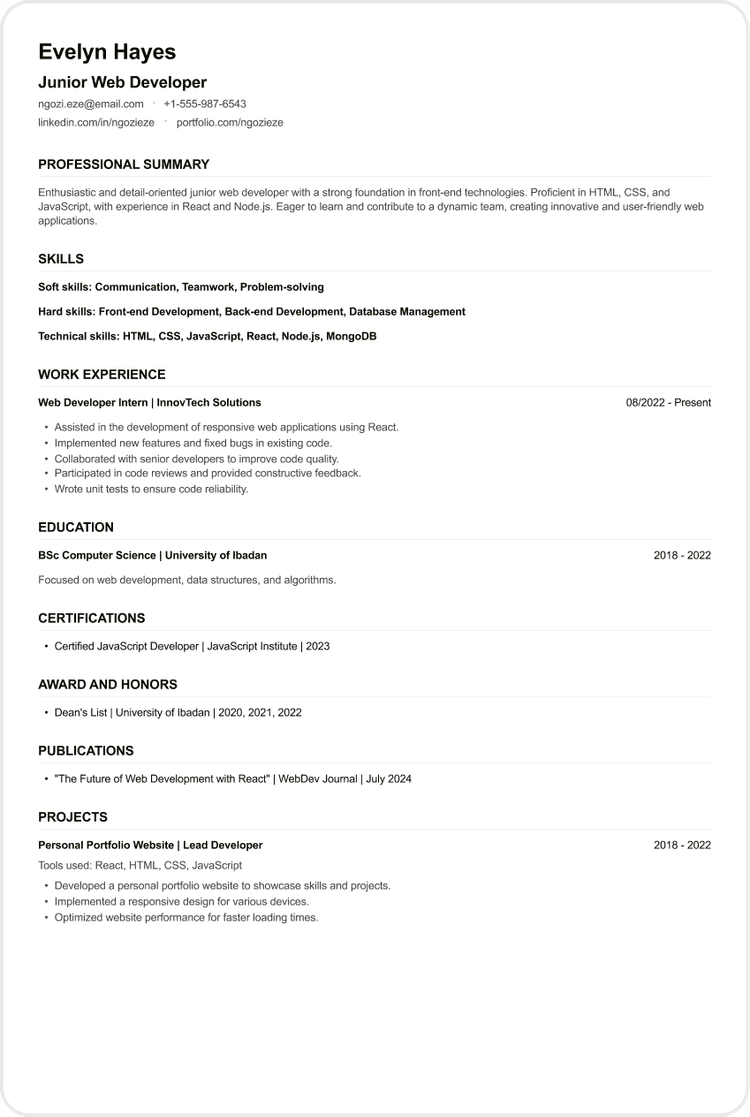
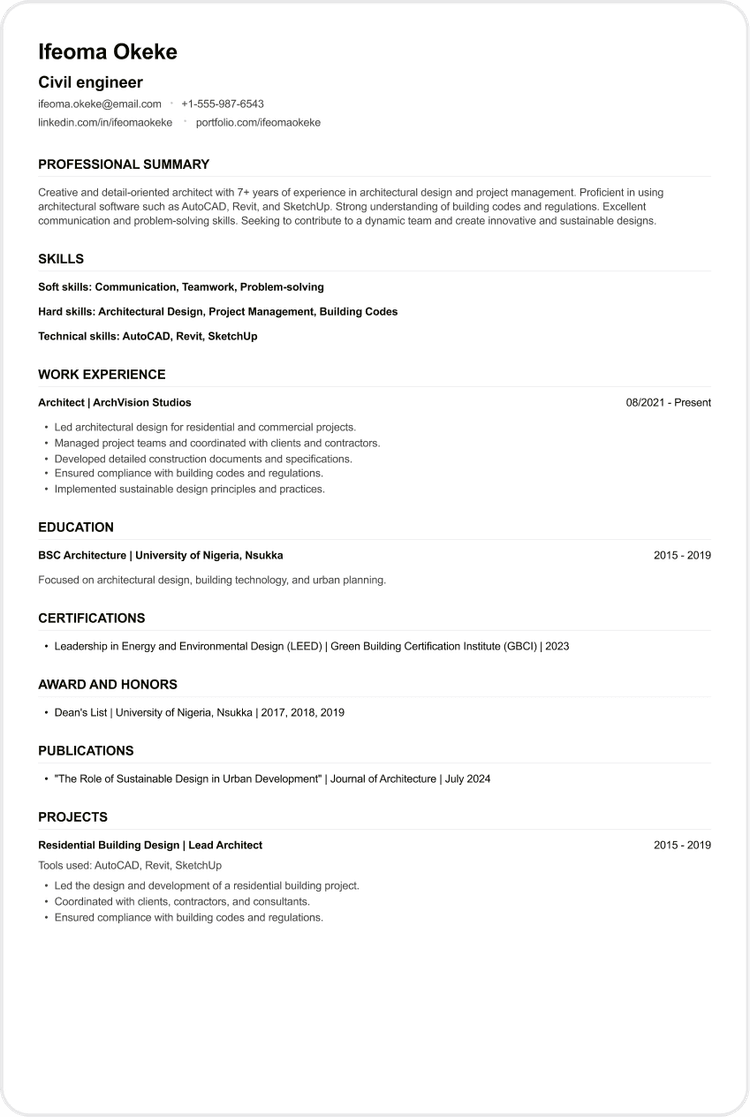
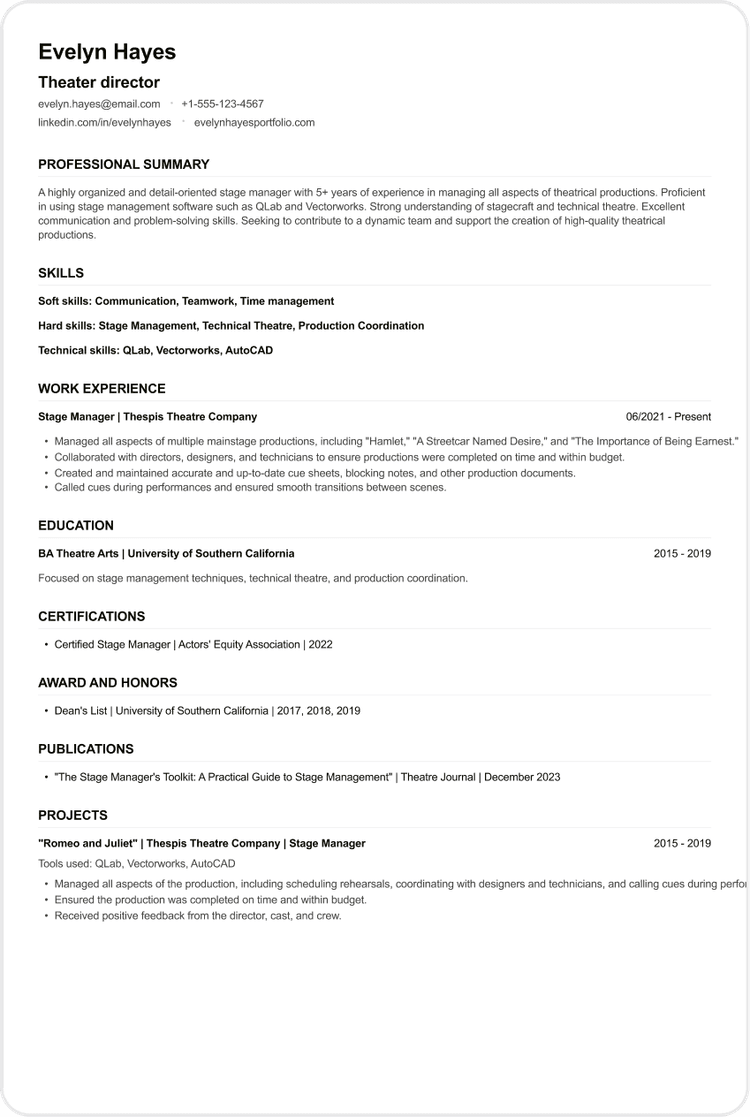
Aerospace Engineer CV Examples
As an Aerospace Engineer, your technical expertise and innovation make you essential to advancing aviation and space technology.
Build your resume for free
Aerospace Engineer CV
How to Write Your Aerospace Engineer CV
Learn how to create your own interview-winning Aerospace Engineer CV with this simple step-by-step guide.
This guide will walk you through writing an Aerospace Engineer CV that highlights your aerospace expertise, design capabilities, and project delivery skills.
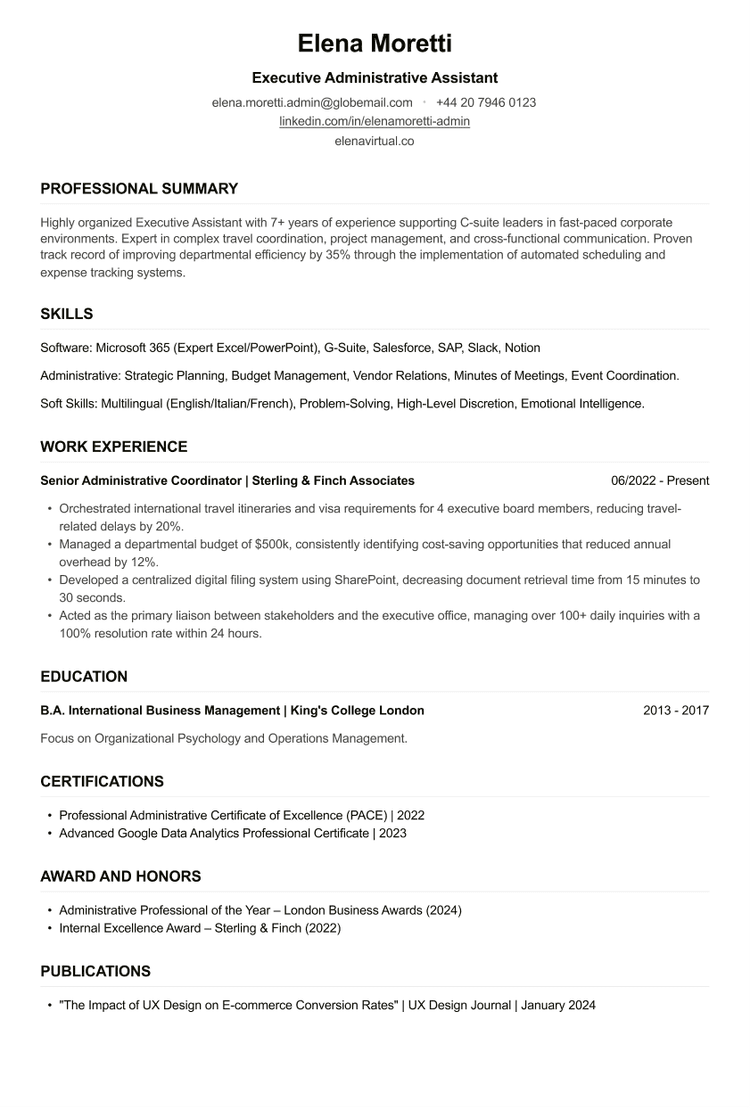
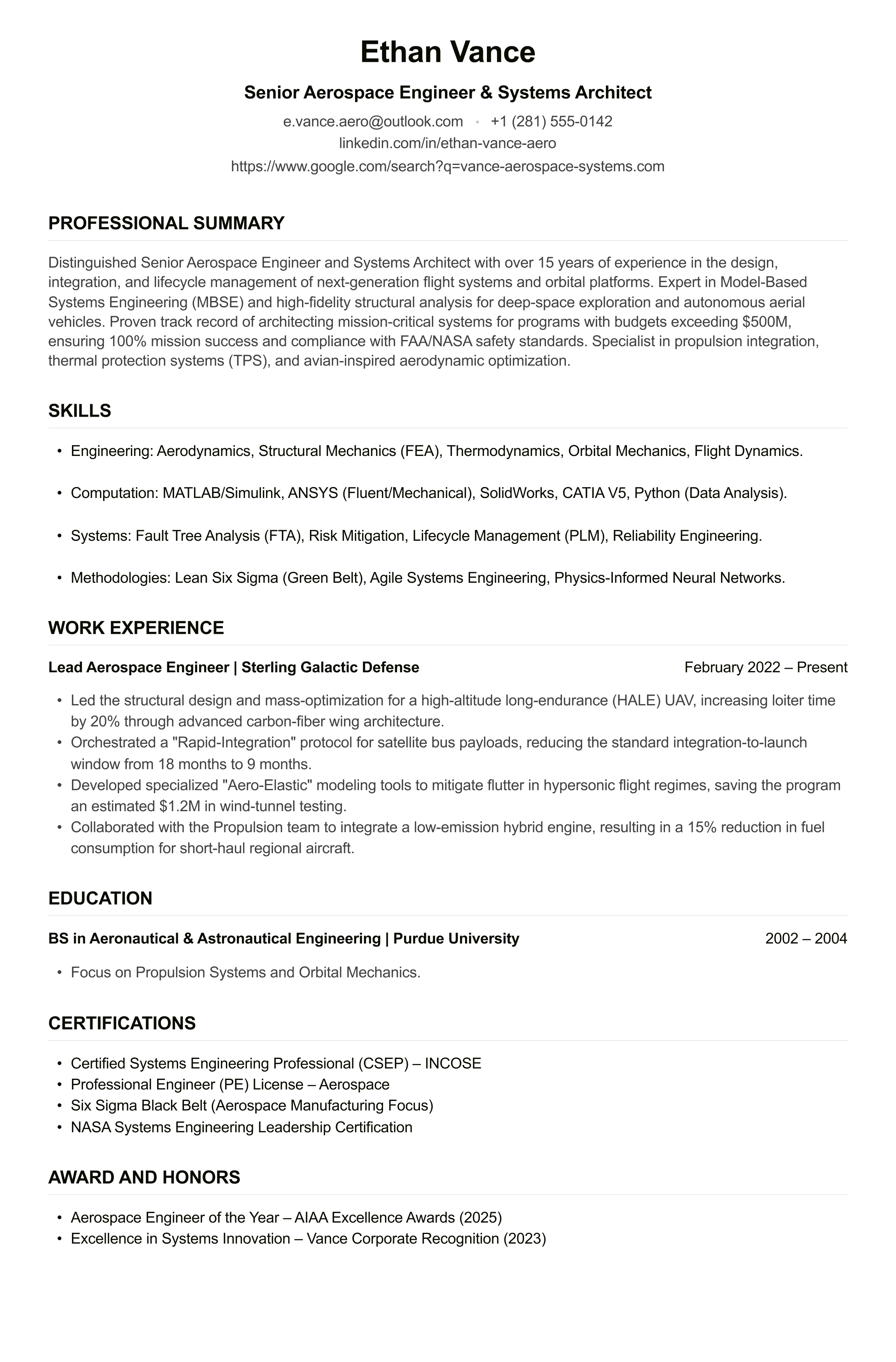
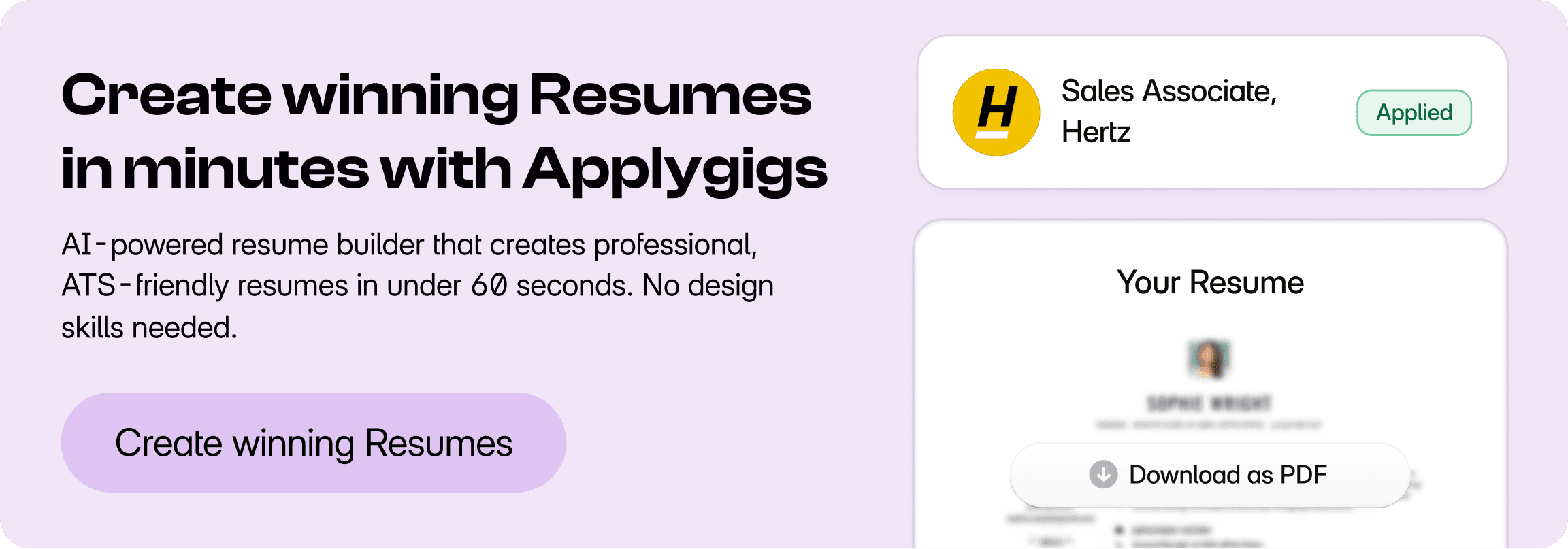
Aerospace Engineer CV example

Structuring your Aerospace Engineer CV


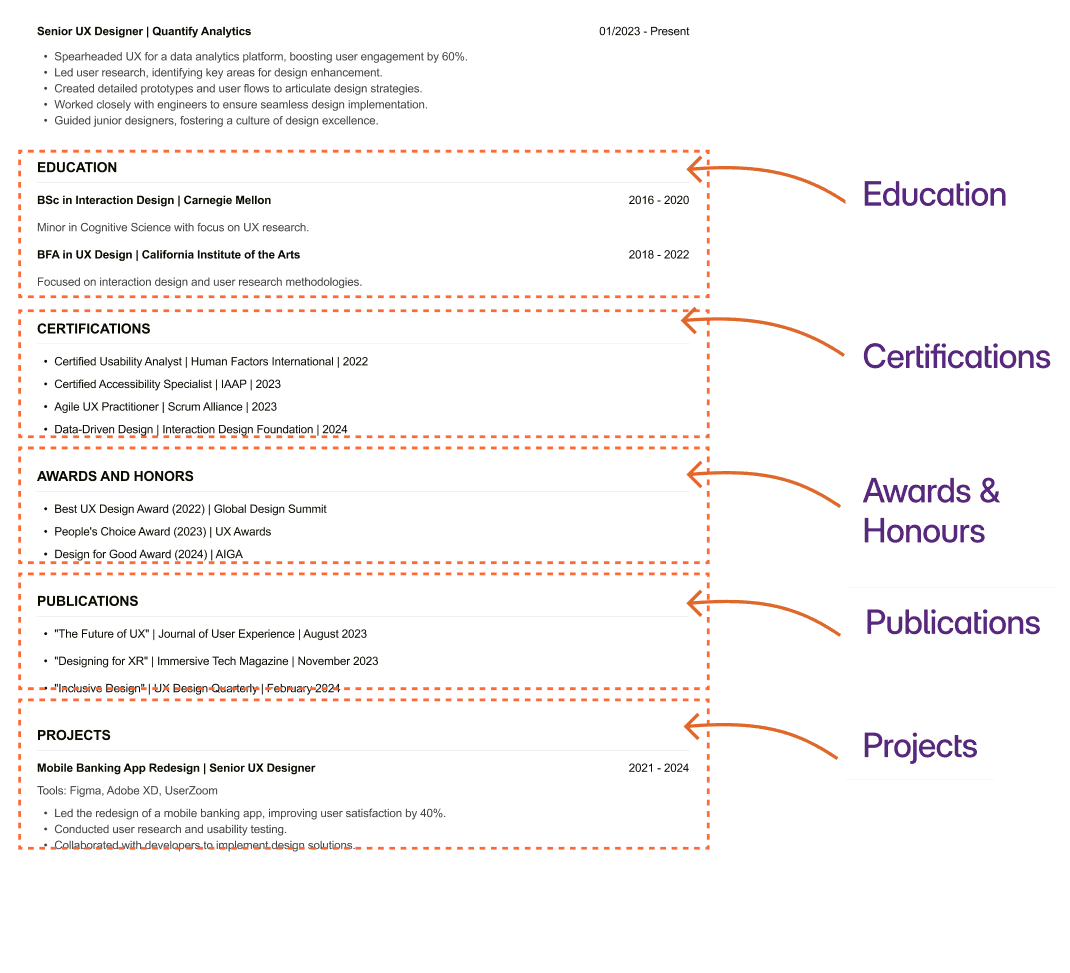
Your CV needs to be as precisely engineered as your aircraft designs.
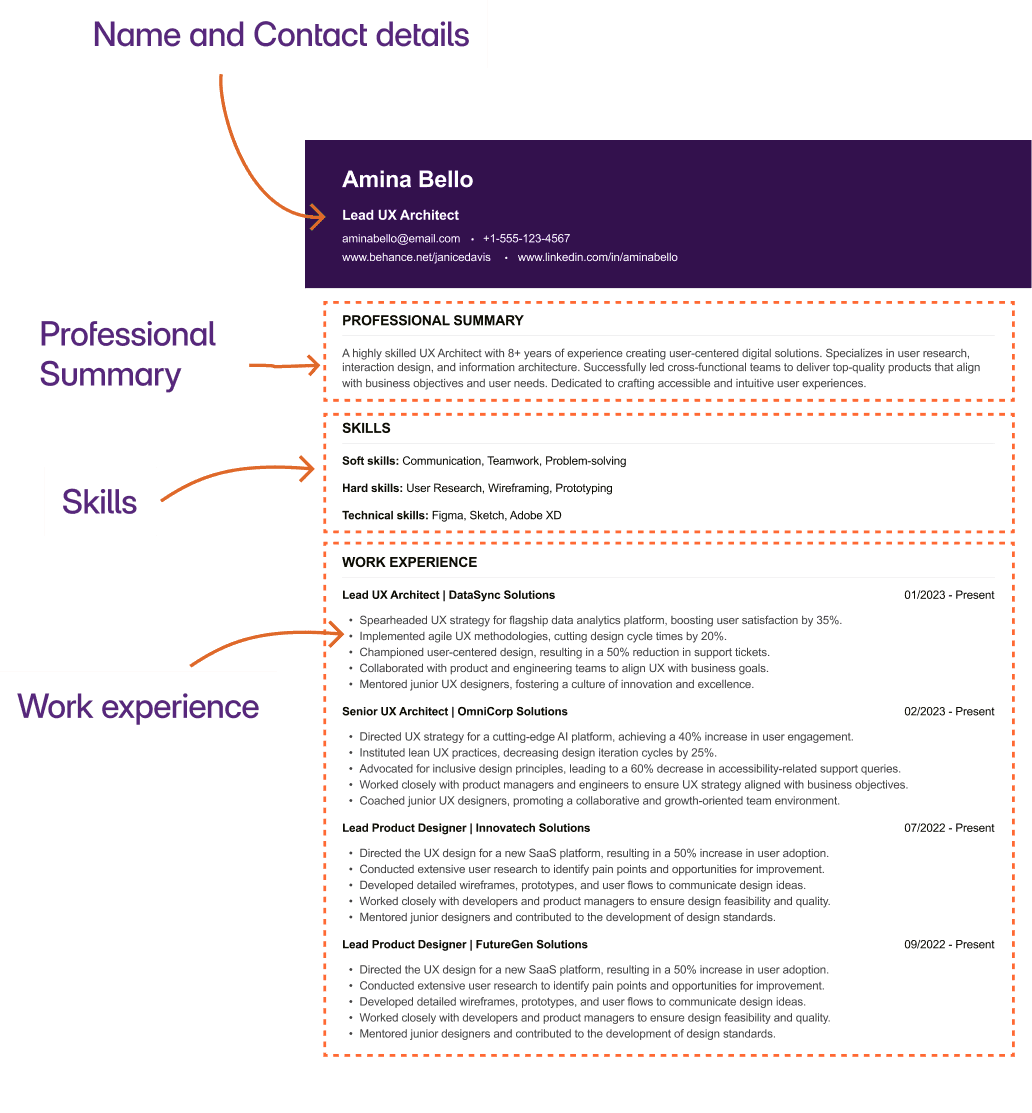
Here's how to structure your Aerospace Engineer CV
- Name and contact details – Place personal information at the top so employers can reach you easily.
- CV profile – Kick things off with a concise overview of what makes you the ideal candidate for the job.
- Core skills – Quickly highlight your most relevant strengths.
- Work experience – Detail your roles in reverse chronological order, focusing on measurable results.
- Education – Provide details on your academic qualifications and relevant certifications.
- Additional info – Optionally, mention certifications, memberships, or personal projects.
Formatting your Aerospace Engineer CV

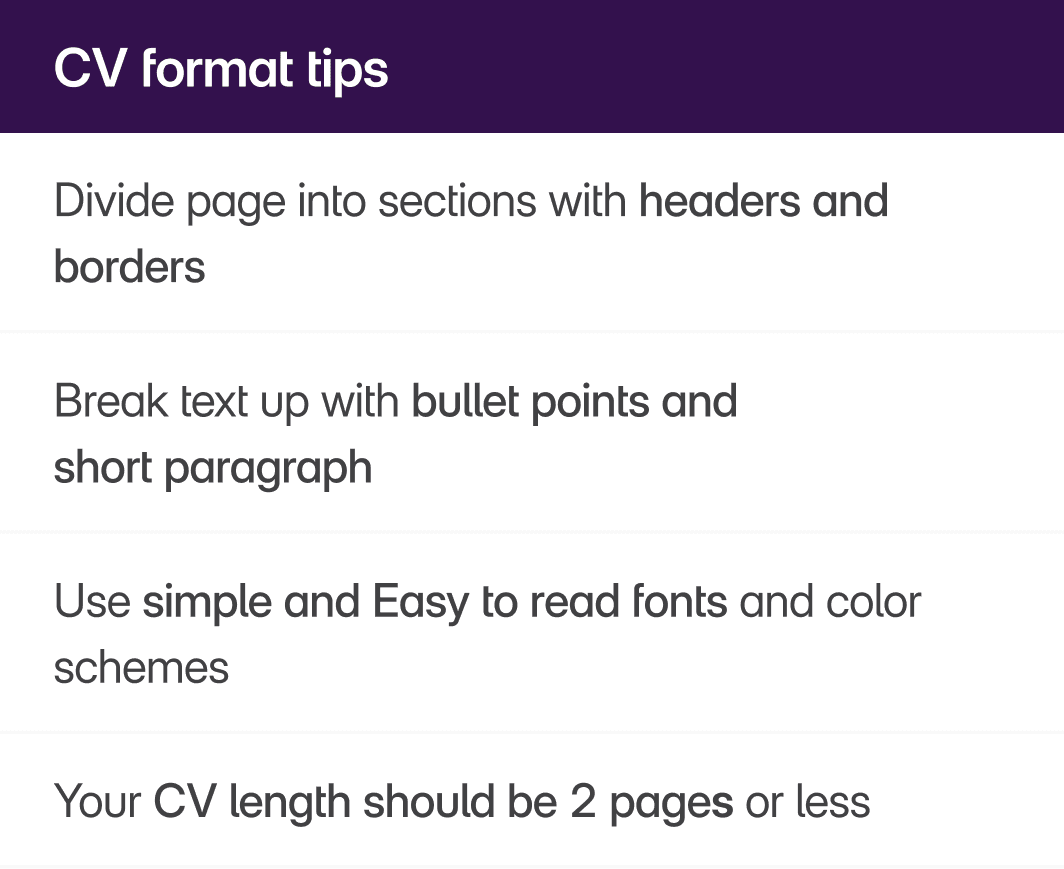
You want to prove to a recruiter that you're technically excellent and detail-oriented, so what better place to start than your CV? Your format should mirror the precision you bring to engineering work.
Here's some useful tips to format your Aerospace Engineer CV effectively:
- Bullet points – Break down duties and achievements into concise details.
- Divide sections – Use clear headings for a straightforward layout.
- Use a clear font and colour scheme – Keep your layout uncluttered for maximum readability.
- No more than 2 pages – Keep it focused on your best and most relevant qualities.
Writing a Aerospace Engineer CV Professional summary
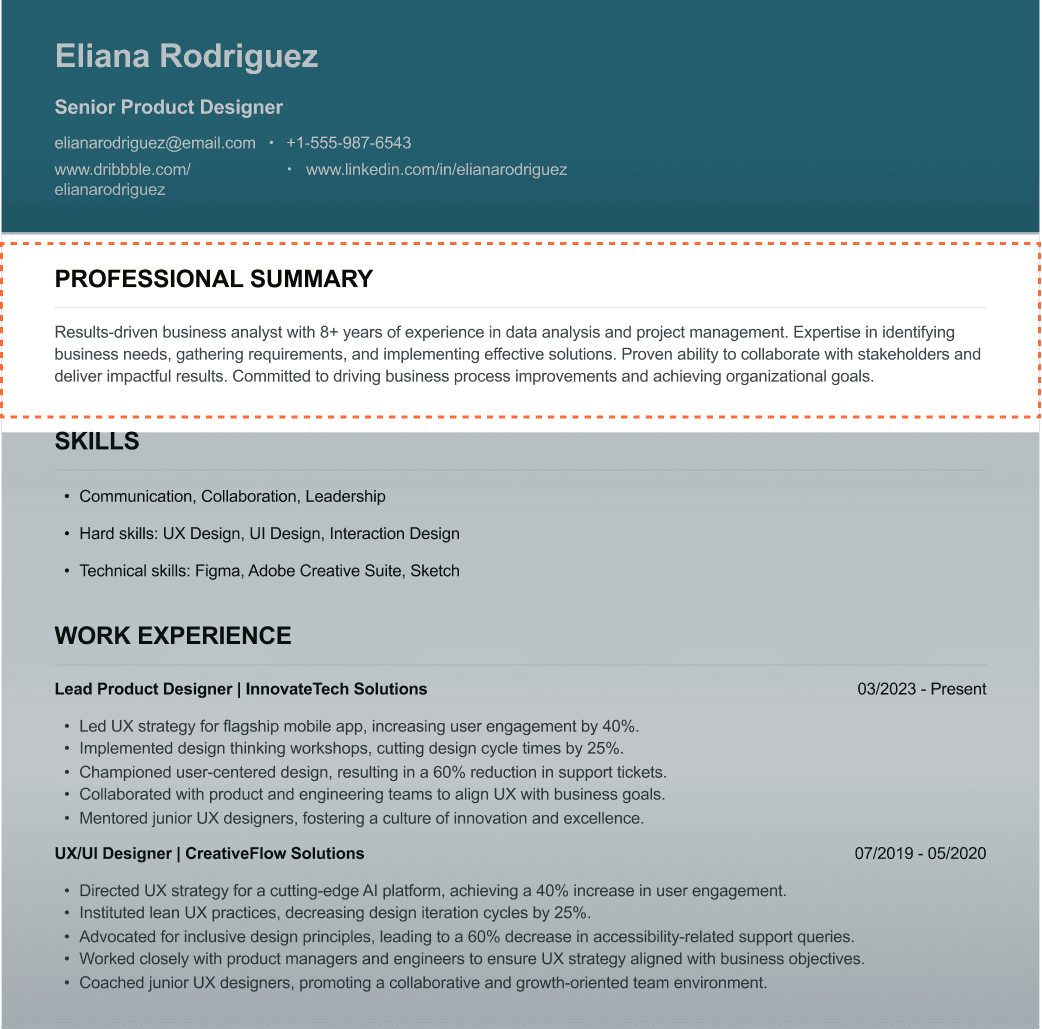
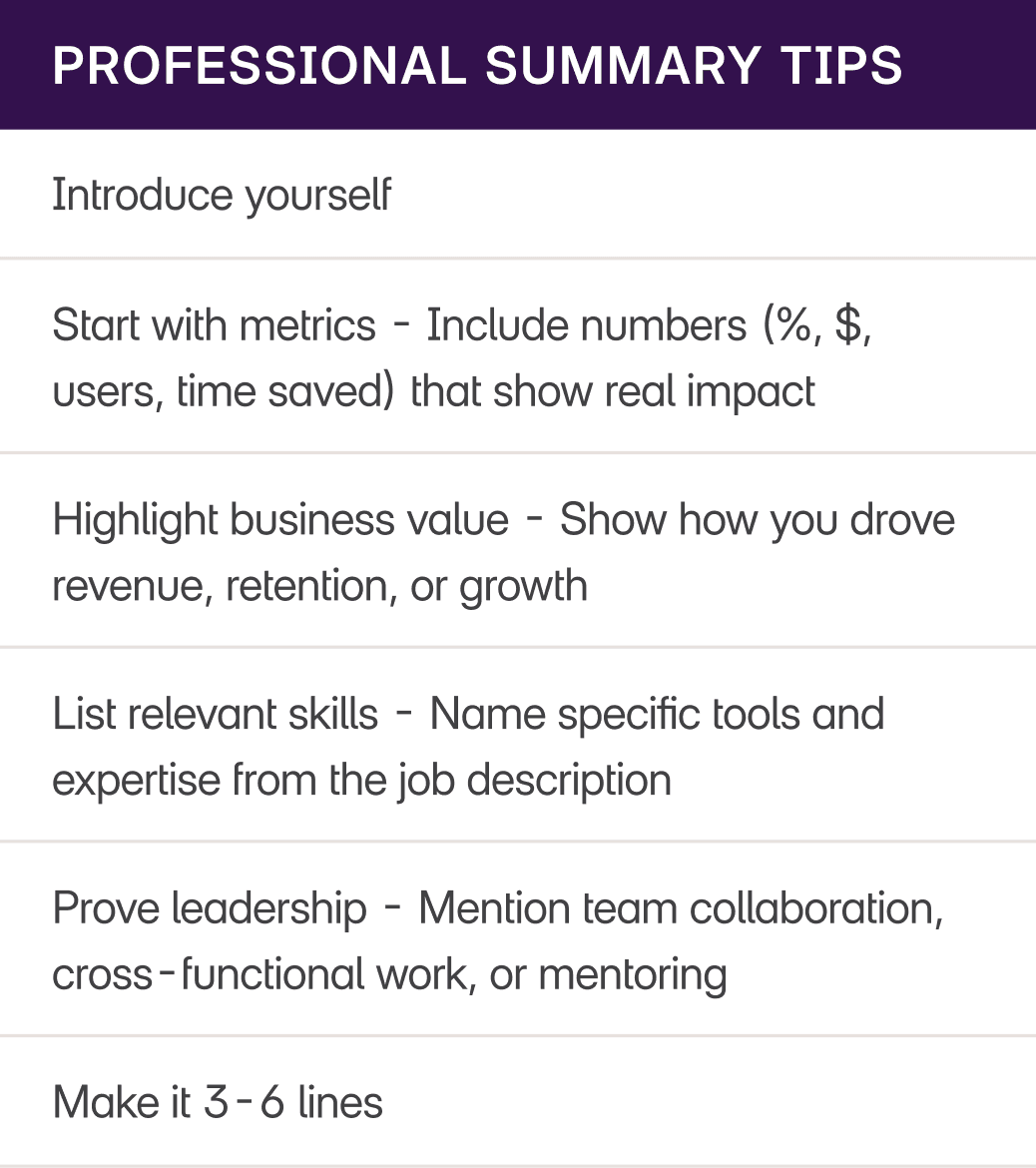
Your CV profile is your chance to introduce yourself as a technical, innovative Aerospace Engineer who delivers cutting-edge solutions.
Aerospace Engineer CV professional summaries :
Professional summary 1
Innovative Aerospace Engineer with six years designing aircraft systems, skilled in aerodynamics analysis, structural design, and CFD simulation. Proven track record of contributing to 4 aircraft programs achieving certification, reducing component weight by 15% through optimization, and delivering designs meeting DO-160 and AS9100 standards across commercial aviation, defense, and UAV platforms with zero safety-critical failures.
Professional summary 2
Experienced Senior Aerospace Engineer with eight years across propulsion systems and flight dynamics, specializing in engine integration, performance analysis, and testing validation. Expertise in leading multidisciplinary teams of 8+ engineers, improving fuel efficiency by 12% through design optimization, and supporting aircraft programs worth $500 million+ across business jets, regional aircraft, and military platforms.
Professional summary 3
Accomplished Principal Aerospace Engineer with over ten years transforming aircraft design, focusing on systems integration, certification compliance, and technical leadership. Proven ability to manage engineering teams of 15+ members, lead certification programs achieving FAA/EASA approval, deliver aircraft modifications generating $50 million+ revenue, and drive innovation across commercial transport, rotorcraft, and space systems sectors.
What to Include In Your Aerospace Engineer CV profile:
- Where you've worked – Mention the types of companies or platforms you've worked on, such as commercial aircraft, defense, space, or UAVs.
- Your top qualifications – Highlight your aerospace engineering degree, CEng, chartered status, or advanced degrees.
- Essential aerospace skills – Include your proficiency with aerodynamics, structural analysis, systems design, and certification.
- Project scale contributed – Reference aircraft programs, development budgets, or certification achievements.
- Relevant software – Mention experience with CATIA, ANSYS, MATLAB, or specific aerospace tools.
How to Present a Aerospace Engineer Core Skills Section Properly
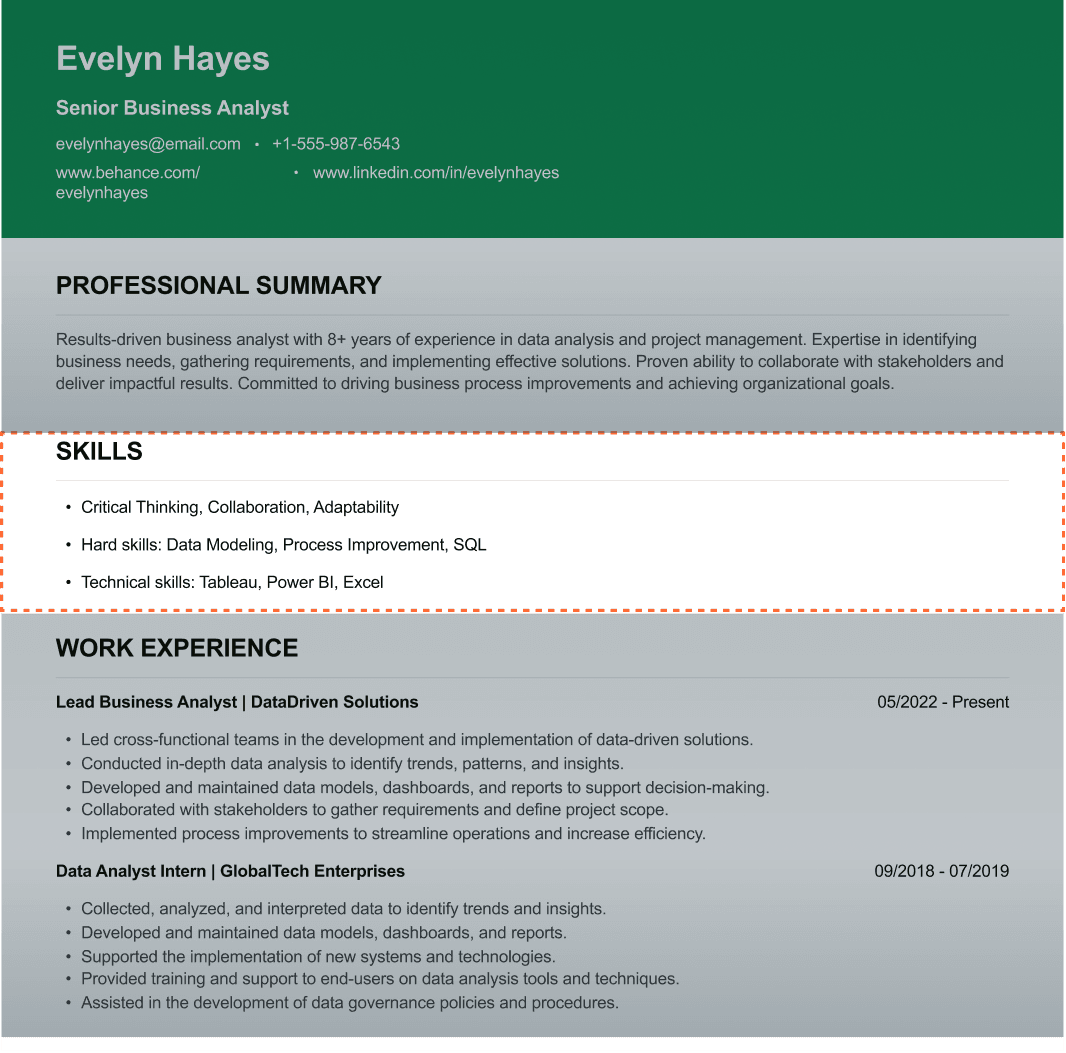
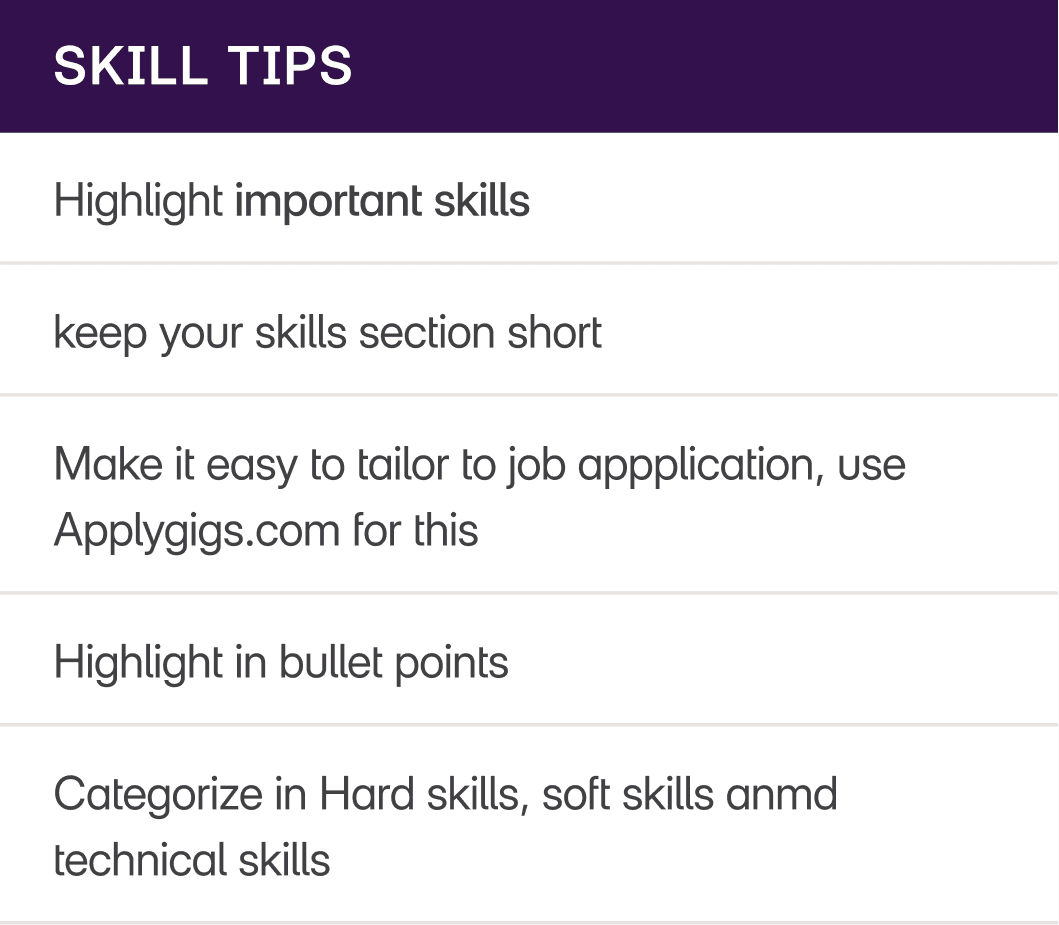
The core skills section is your quick-reference list, showing employers why you're the Aerospace Engineer who can deliver exceptional technical solutions.
Aerospace Engineer CV Top skills
Top skills for Aerospace Engineer CV
- Aerodynamics Analysis – Performing aerodynamic calculations, CFD simulations, and wind tunnel testing.
- Structural Analysis – Conducting stress analysis, fatigue calculations, and FEA using ANSYS or NASTRAN.
- Aircraft Design – Designing aircraft structures, systems, and components using CATIA or NX.
- Systems Engineering – Integrating aircraft systems ensuring compatibility and performance requirements.
- Certification and Compliance – Ensuring designs meet FAA, EASA, and military airworthiness standards.
- Propulsion Systems – Analyzing engine performance, integration, and installation requirements.
- Flight Testing – Supporting flight test programs, data analysis, and performance validation.
- Materials and Manufacturing – Selecting aerospace materials and designing for manufacturability.
How to Write a Aerospace Engineer CV Work Experience
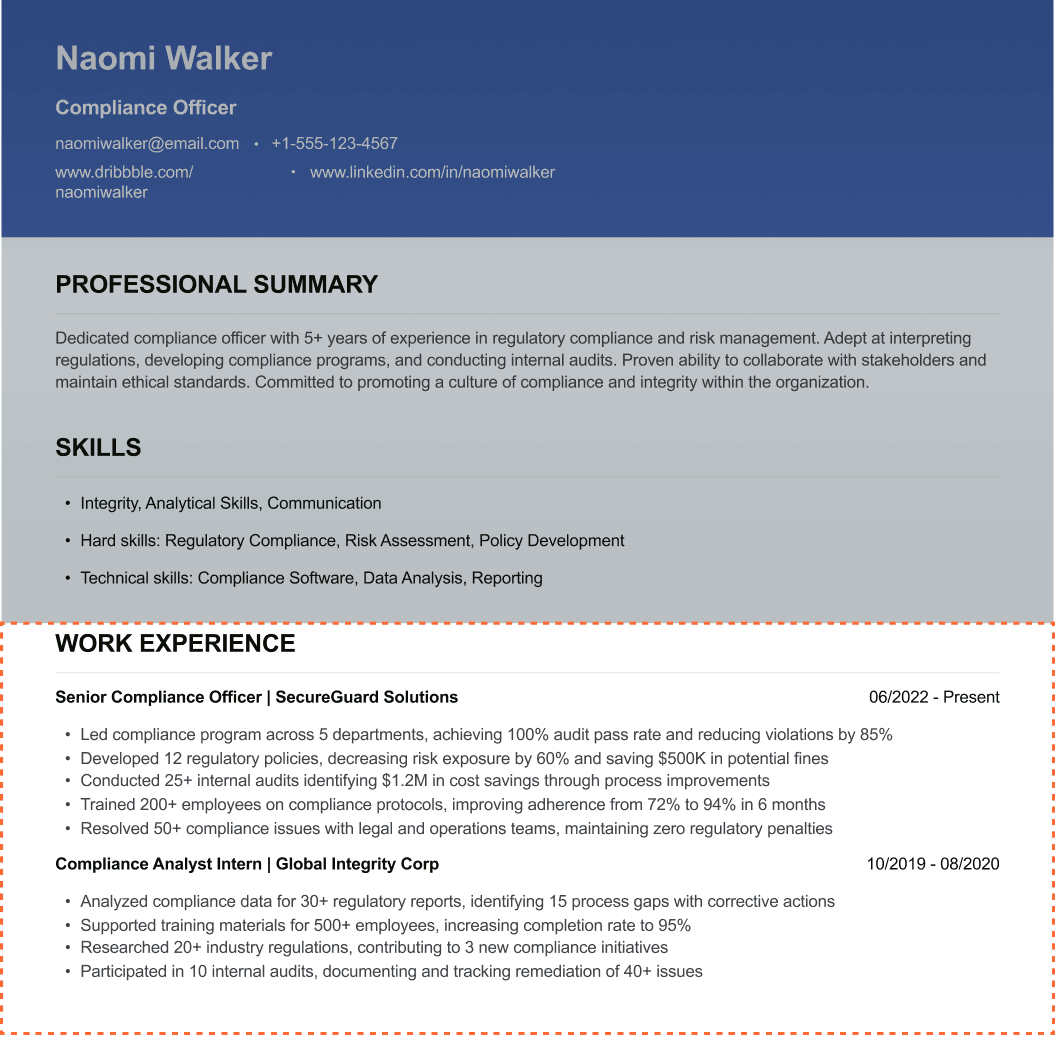
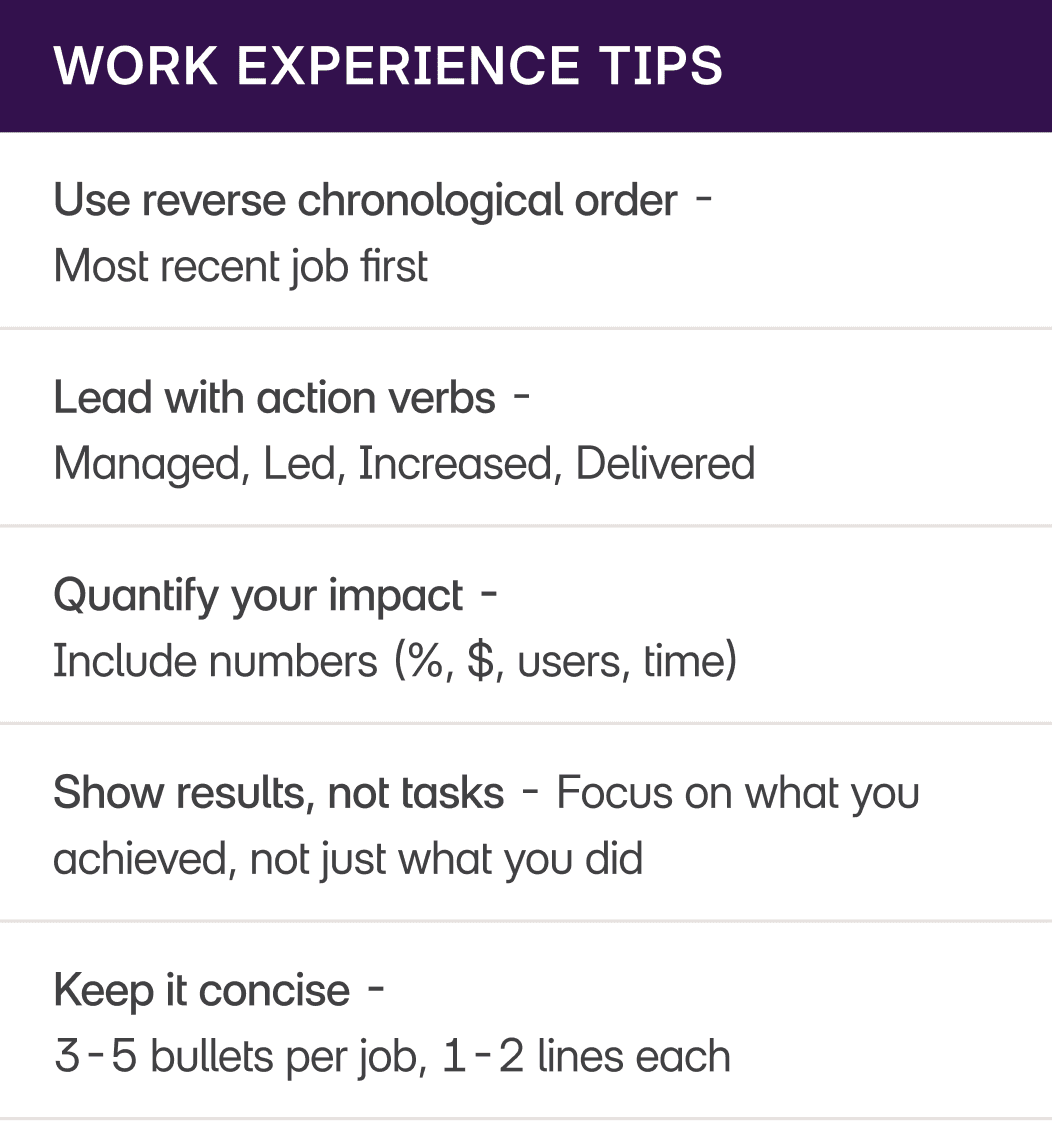
Here's the bulk of your CV: your work experience section is where you prove how your aerospace expertise has delivered successful aircraft programs.
Aerospace Engineer CV Work experience examples
Aerospace Engineer | Commercial Aircraft Manufacturer
Responsibilities
- Performed structural analysis on wing components using NASTRAN achieving 18% weight reduction versus baseline design while maintaining required safety factors and meeting all CS-25 structural requirements
- Conducted aerodynamic optimization of winglet design using CFD analysis improving fuel efficiency by 3.2% equating to $150,000 annual savings per aircraft over operational lifetime
- Designed composite wing spar structures using CATIA ensuring manufacturability and achieving first-time-right production validation with zero non-conformances during prototype build
- Led integration of flight control actuators coordinating with systems, electrical, and hydraulics teams resolving 45+ interface issues and enabling successful ground testing
- Supported certification activities preparing compliance documentation and coordinating with FAA DERs achieving structural substantiation approval 2 months ahead of schedule
Writing a Aerospace Engineer CV section
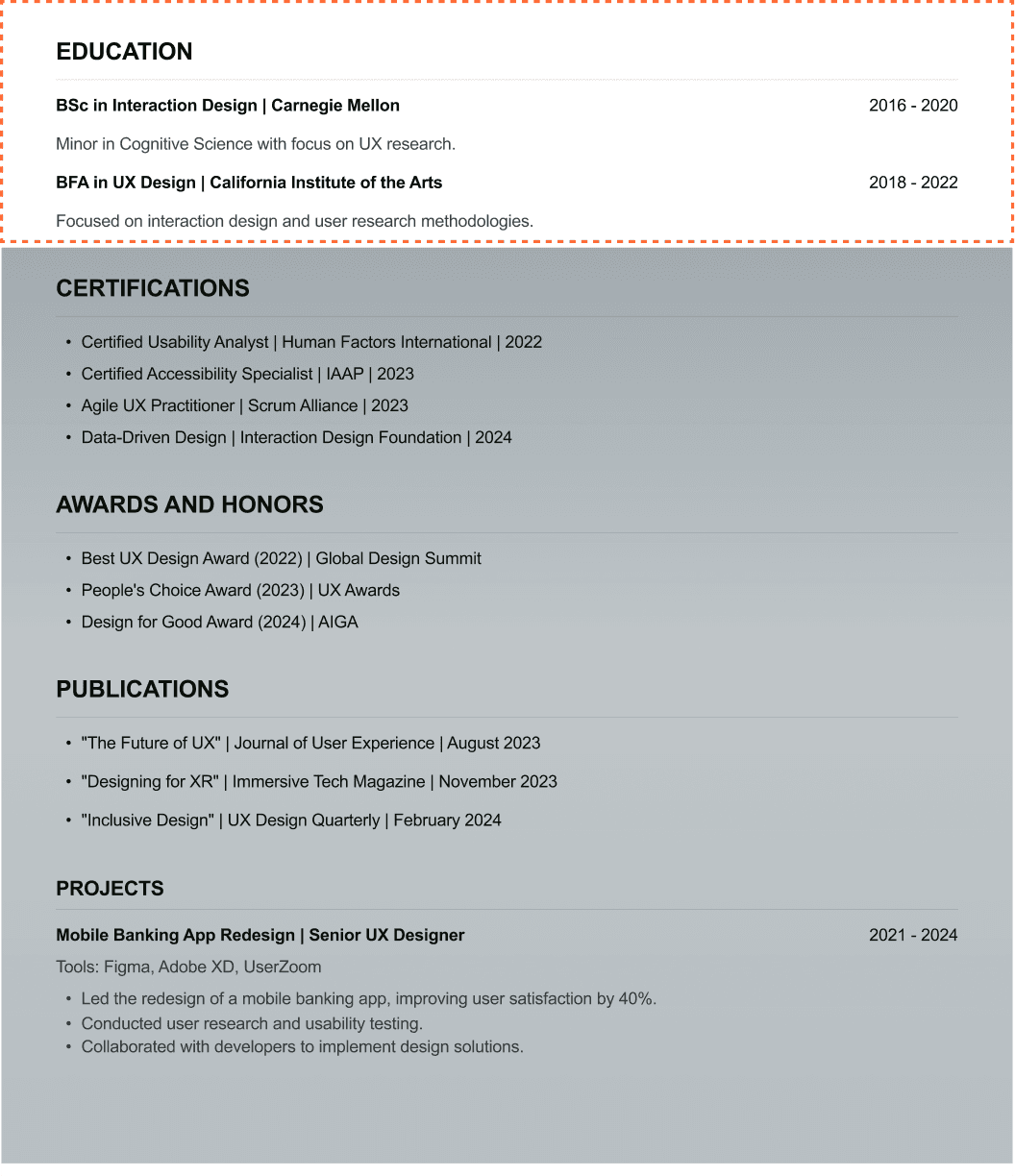
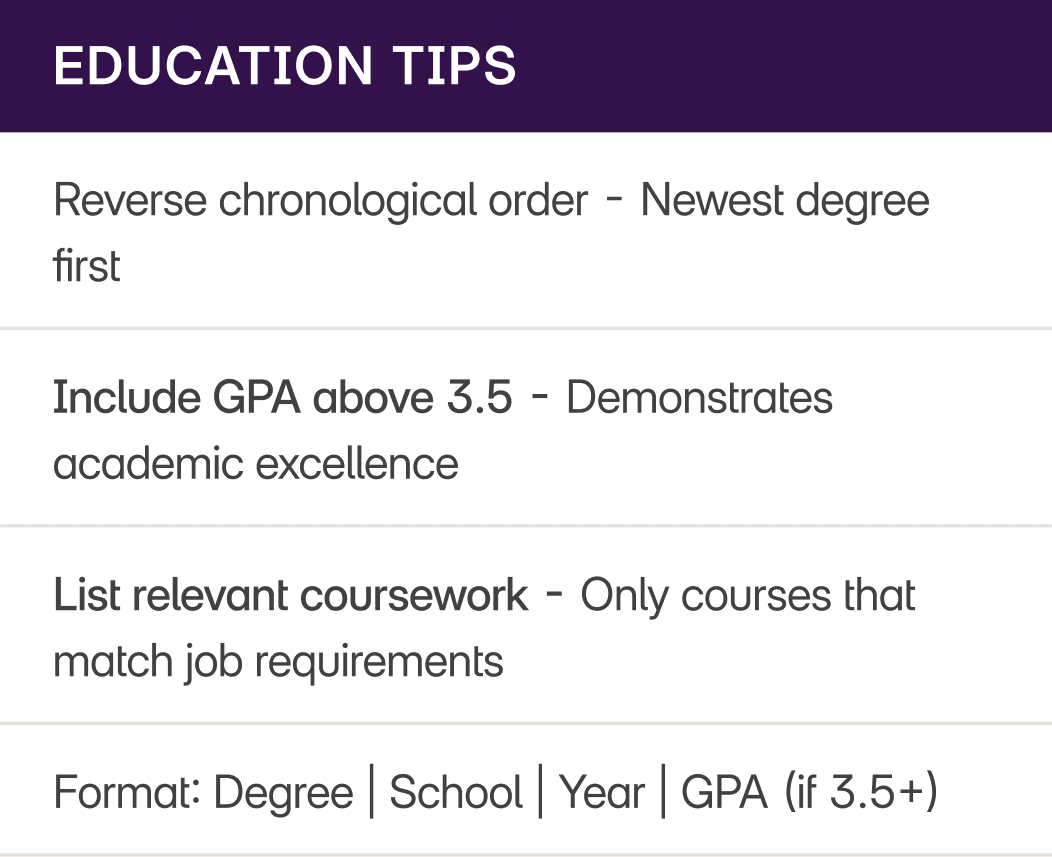
The education section shows the qualifications that lay the foundation for your aerospace engineering career.
Best Qualifications for Aerospace Engineer professionals
- Bachelor's Degree in Aerospace Engineering – Foundational aerospace qualification.
- Master's Degree in Aerospace Engineering or related field – Advanced technical qualification.
- CEng (Chartered Engineer) – Professional engineering status with Engineering Council.
- PhD in Aerospace Engineering – Research qualification for specialist or academic roles.
- FRAeS (Fellow of Royal Aeronautical Society) – Senior professional recognition.
- Professional Engineer (PE) License – US professional engineering registration.
How to Write a Aerospace Engineer CV Certification, Awards and Publication Section
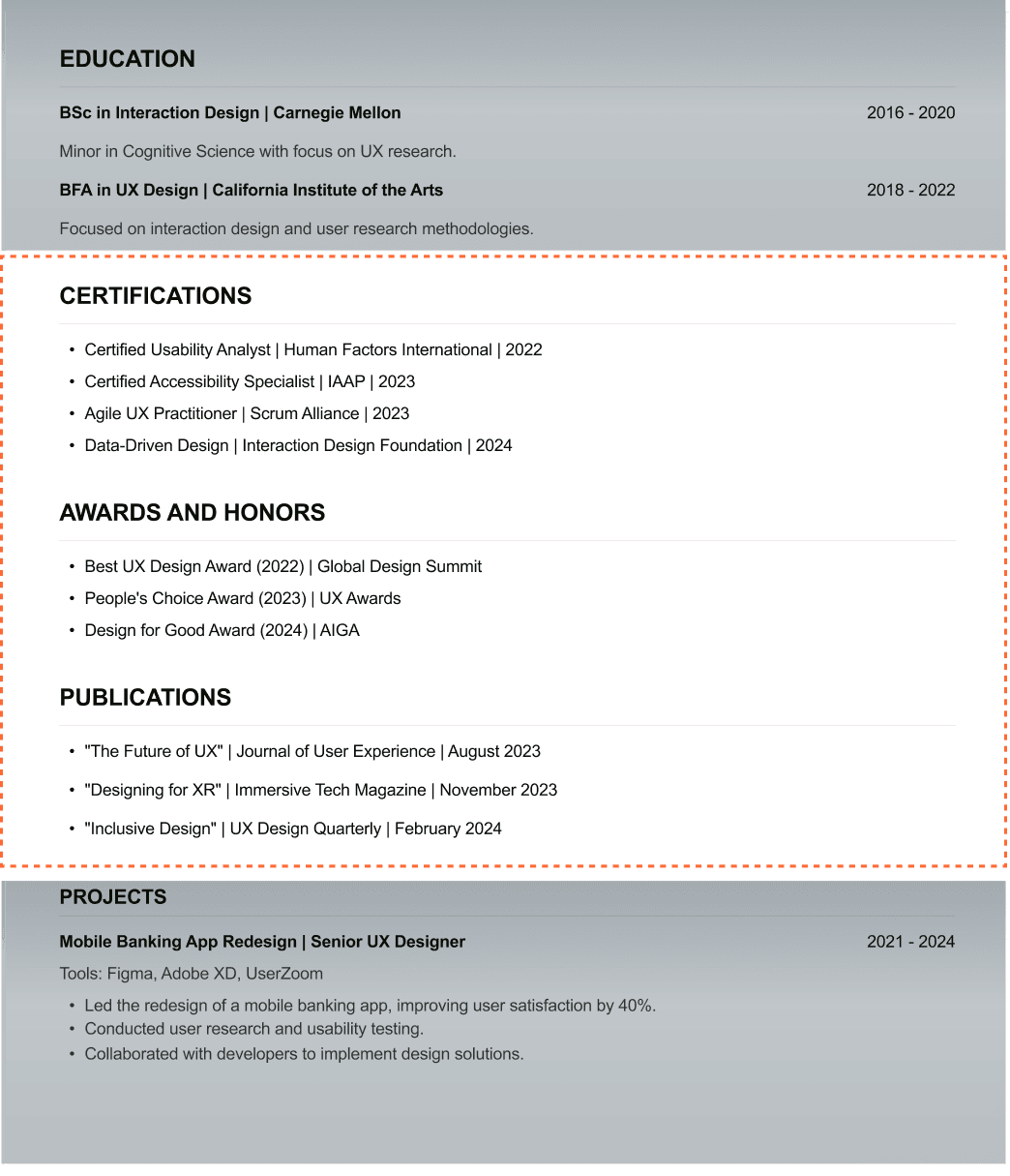
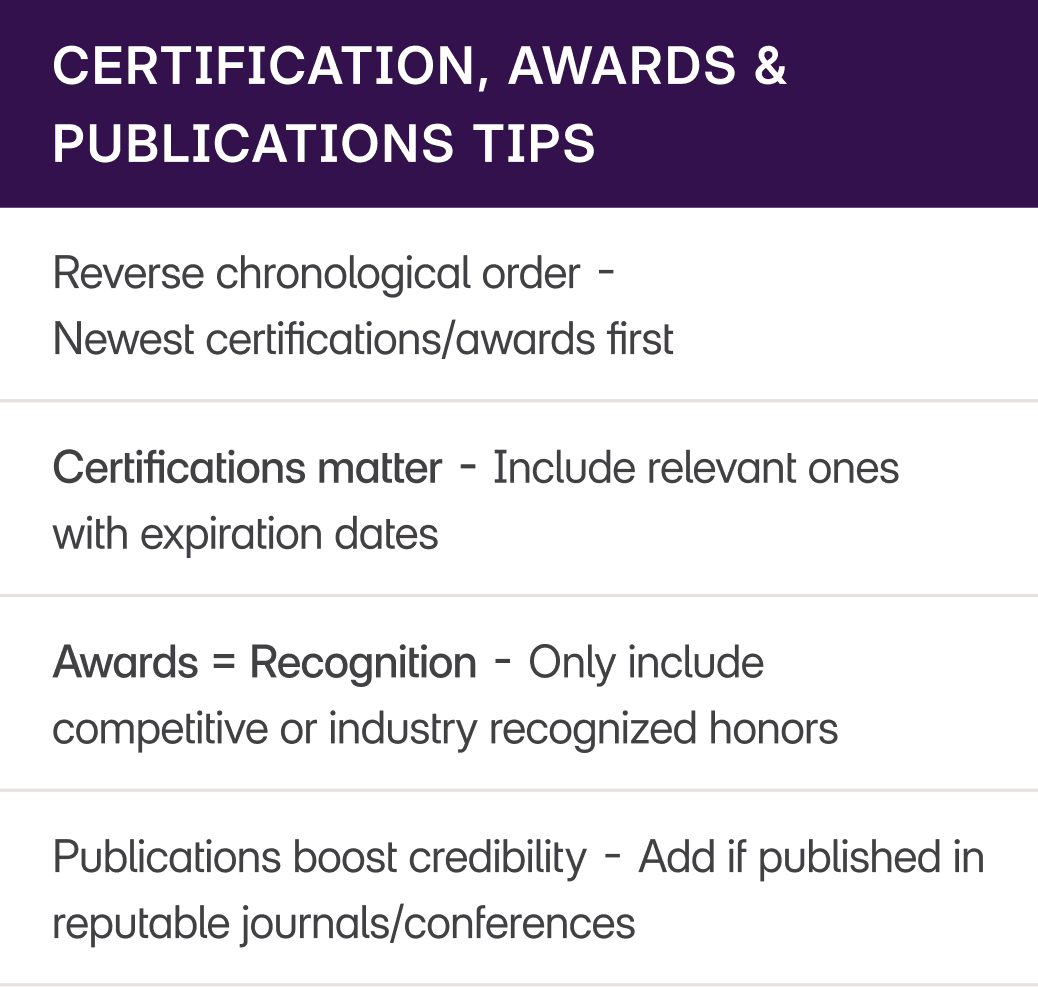
Adding a dedicated section for certifications, awards, and publications can significantly strengthen your Aerospace Engineer CV by demonstrating your technical expertise, professional recognition, and research contributions.
Aerospace Engineer CV certification, Awards and Publication examples
Chartered Engineer (CEng) – Engineering Council UK, 2023
Member of Royal Aeronautical Society (MRAeS) – RAeS, 2024
CATIA V5 Certified Professional – Dassault Systèmes, 2023
ANSYS Structural Mechanics Certification – ANSYS, 2024
AS9100 Quality Management Systems – SAE International, 2023
How to Write a Aerospace Engineer CV Projects Section
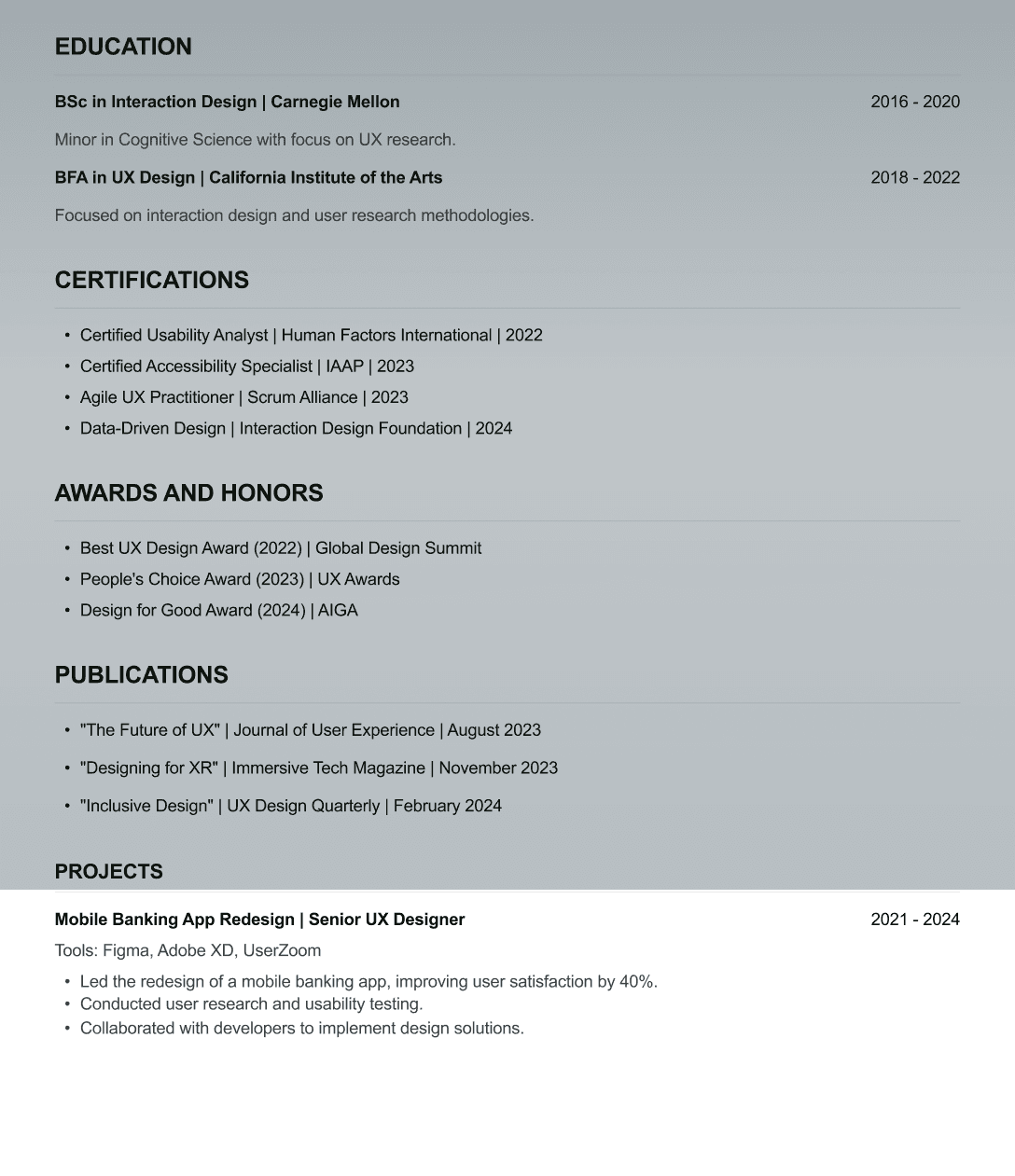
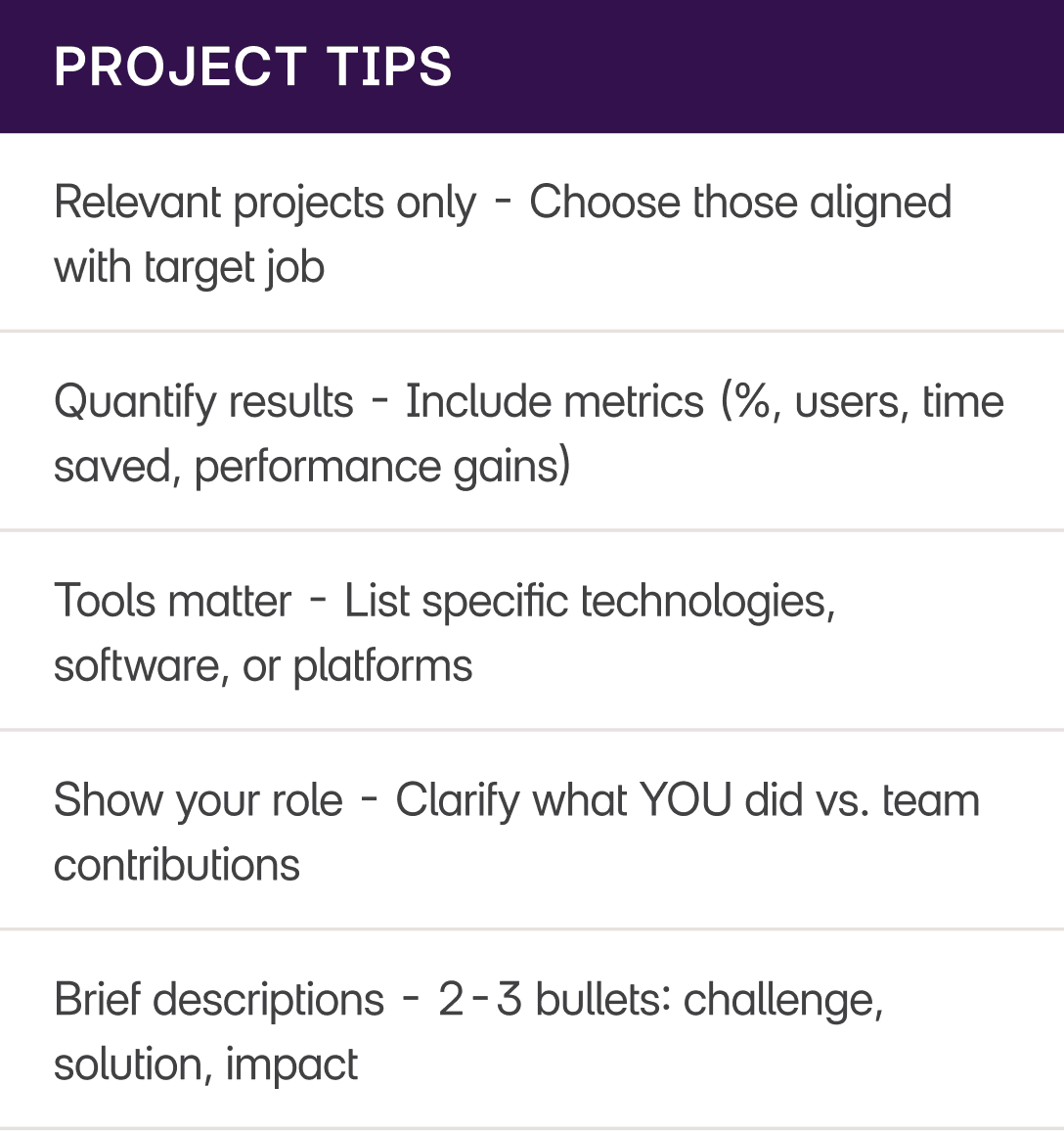
Showcasing specific projects in your Aerospace Engineer CV demonstrates your ability to deliver complex aerospace systems and solve technical challenges.
How to structure project descriptions
Project Title | Organisation | Duration
- Concise one-liner descriptions of key contributions and measurable outcomes
Aerospace Engineer CV projects examples
Next-Generation Business Jet Wing Design | Business Aviation OEM | Jan 2023-Dec 2024
Designed composite wing structure achieving 22% weight saving versus aluminum baseline while maintaining flutter margins and meeting FAR Part 23 structural requirements
- Performed aeroelastic analysis using NASTRAN preventing flutter onset throughout flight envelope and achieving 15% margin above VNE certification speed
- Optimized wing airfoil using CFD achieving L/D ratio of 18.5 representing 8% improvement versus previous generation design and enabling 450nm additional range
- Coordinated structural testing program managing static and fatigue tests on full-scale wing specimen achieving successful certification without design modifications